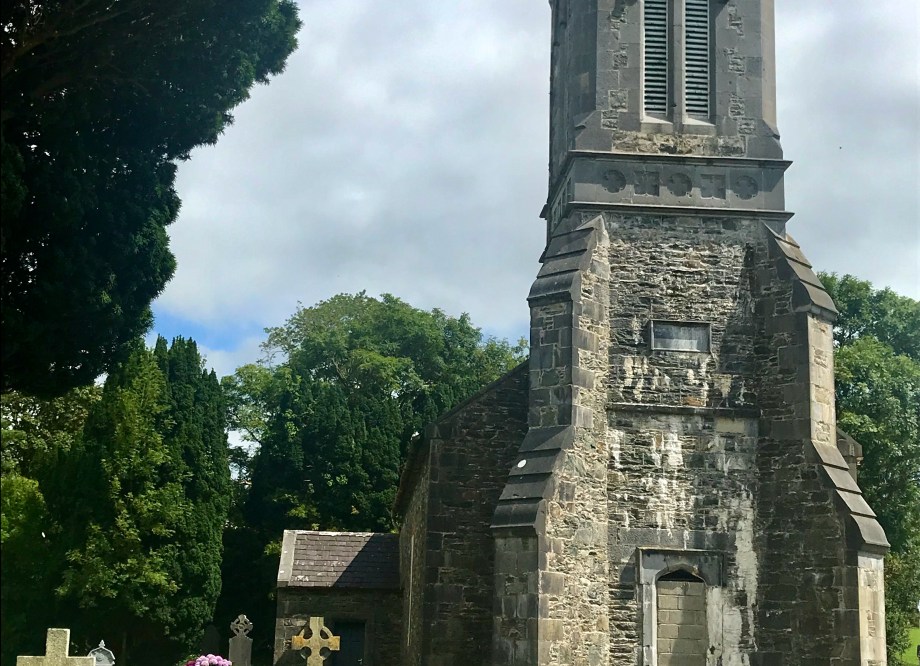
This is the third blog in a series about my family’s involvement with the Church of Ireland in Kerry.
Untangling the lives of George and Sarah Byrne
In 1857 a 22 year old woman named Sarah Ruddle married 26 year old George Byrne in Killarney Parish Church of Ireland. There is reason to question the accuracy of the ages recorded on their marriage record, as will be seen. Sarah was the daughter of Thomas Ruddle, a parish clerk in Killarney. On the marriage record her occupation is listed as “sextoness,” which shows that her church involvement was not just on Sundays. Having said that, although “sextoness” is certainly a church occupation, exactly what she did is not clear. Typical duties of a sexton (male) included digging graves, maintaining the churchyard, and ringing the church bell, but it seems unlikely that Sarah engaged in heavy physical activities.
The only thing which is certain is that she acted as witness to various marriages, with her name appearing in at least nine marriages at Killarney church from 1847 to 1857. However, if her age as recorded on her marriage certificate is correct, she was born in 1835 and therefore only 12 years old when she witnessed her first marriage. This also seems unlikely. I suspect that her age at marriage was closer to 25 and she witnessed her first marriage when she was perhaps 15 (which would give her a birth year of 1832). Unfortunately we have been unable to locate a birth certificate to confirm her exact date of birth and the death record that seems most likely to be hers records her as 68 years old in 1890, though I suspect that her age when she died in 1890 was closer to 58. Sarah Ruddle was probably born around 1832.
George Byrne, the young man who she married, has an equally confusing date of birth. His marriage record says he was 26 in 1857 giving him a birth year of 1831. However, his death record in 1872 says he died at age 47, giving him a birth year of 1825, making him 32 when he married. The only birth record that we have found that is likely to be his is from 1827, which would make him 30 when he married, and 45 when he died. The dates are confusing, but ages recorded on marriage and death certificates are often wrong, since they are based on memory. Birth records, of course, should be roughly accurate. We have a birth record for George, dated 1827. We have found none for Sarah.
The birth record for George Byrne, if it is indeed the birth record for “our George” and not some other by the same name, reveals that he was born into a Catholic family. He is the only one of my Kerry ancestors who was Catholic, but at some stage he converted, because he married Sarah Ruddle in the Church of Ireland. His parents were William Byrne and Johanna FitzGerald of Killarney, who married in 1826, and then had George, who was baptised in 1827. Both William and his son George were nailors, makers of nails, blacksmiths.
George, apparently, converted from Catholicism to Protestantism. When and why he converted is uncertain. It would seem that his father William also converted at some stage since he appears to have been Protestant when he died in 1882. Perhaps George was the first to convert, as a result of his relationship with Sarah. Or it may have been William, his father, who was first, leading to his son, George, also attending the COI where he met Sarah. Whatever the order of events, George and Sarah Byrne were Protestants and raised their family as Protestants. I have not been able to find a death record for Johanna Byrne, George’s mother. Perhaps she had died, and his father William ended up living with George and Sarah in his old age, bringing him into contact with the Protestant faith that his son had adopted. George died in 1872, and his father outlived him by ten years, finally dying in 1882. Perhaps his widowed daughter in law, Sarah, continued to care for William after her husband had died.
George and Sarah’s marriage was, therefore, one of the many mixed marriages in Kerry at the time, in which Catholic married Protestant. Such arrangements required the willingness of one of the couple to surrender his or her own religious denomination, and in this case it was George who appears to have done so. It is impossible to know if George became a Protestant out of a religious conviction or for pragmatic reasons. It seems unlikely that we will ever know the full story of the Byrne and Ruddle families, and their religious convictions.
Killarney’s churches
Both the major churches in Killarney – Roman Catholic and Church of Ireland – have the same name, St Mary’s. However, the official name for the main Catholic church, built between 1842 and 1853, is the Cathedral of Our Lady of the Assumption.
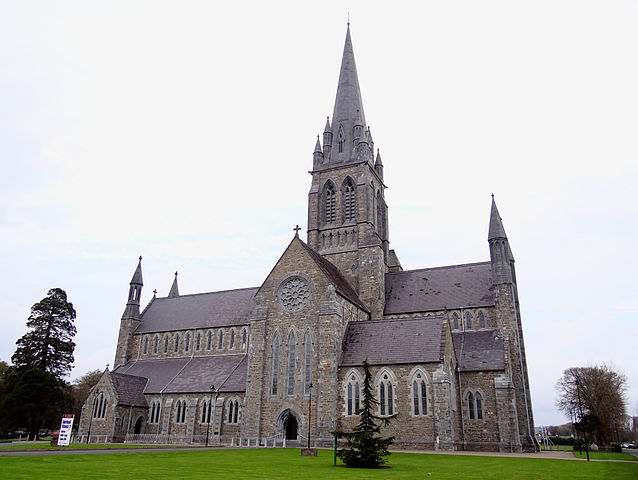
This Catholic cathedral did not exist in George’s youth, and was opened a few years before George and Sarah married. Prior to the building of the cathedral, the Catholic population of Killarney was served only by a small chapel in New Street, one of the main thoroughfares of Killarney. This was the Catholic Church that George Byrne knew as a child, and quite possibly where he was baptized. The site of that chapel was about 500m to the east of the present day cathedral. A laneway off New Street called Chapel Lane originally ran between the chapel on one side and the associated church buildings on the other. None of these buildings remain, having been replaced by a mixture of residences and businesses. Croker writes about this Catholic Chapel in his 1837 book, Legends of the Lakes. Chapter VI opens as follows:
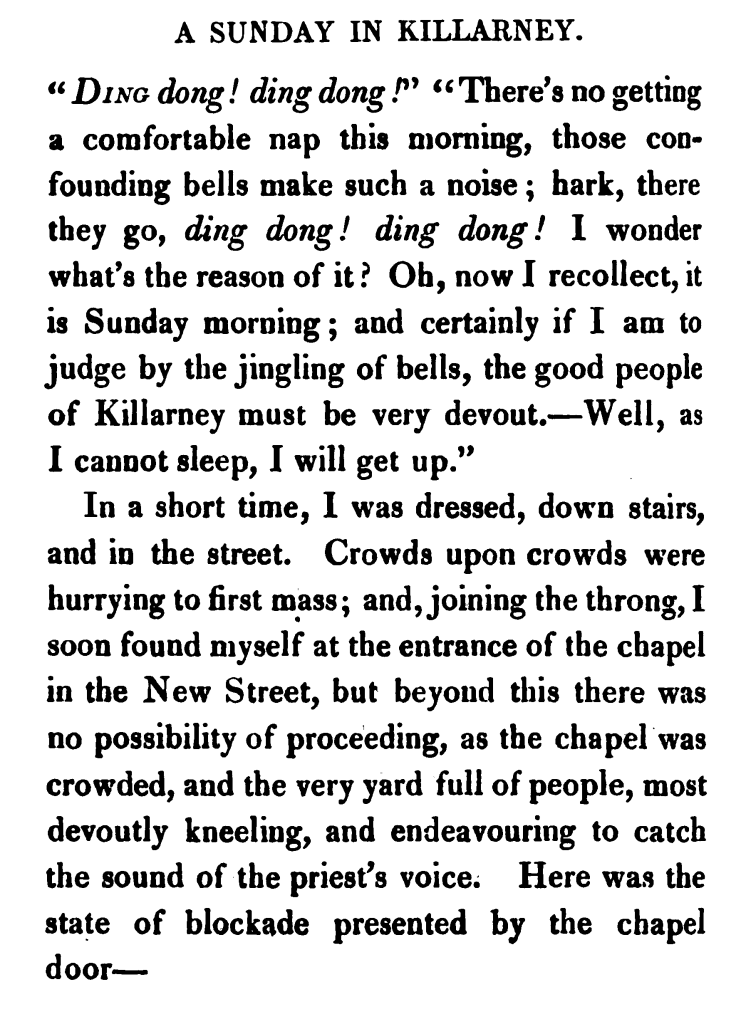
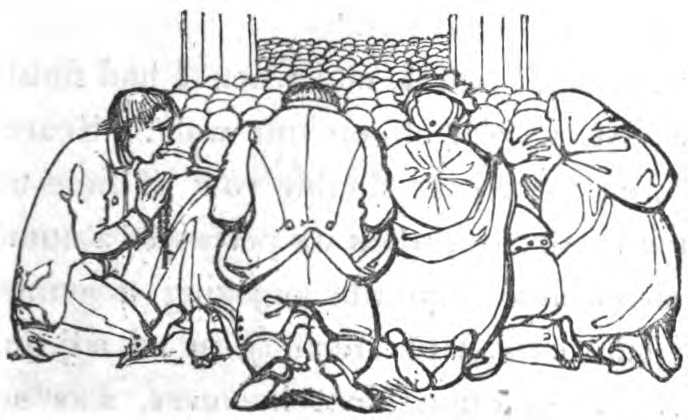
Oddly enough, long after the disappearance of both chapel and church buildings in New Street, George and Sarah Byrne lived in Chapel Lane, as evidenced by George’s death certificate in 1872. If George had indeed been baptized in the Catholic Chapel which Croker refers to above, as I suspect he was, it means that his life in some ways had begun and ended in the same little lane in Killarney. A few years before George and Sarah married, the new cathedral had opened down the road, and I suspect the older chapel had been deconsecrated and either demolished or was being used for other purposes. There is certainly no sign of a chapel there now.
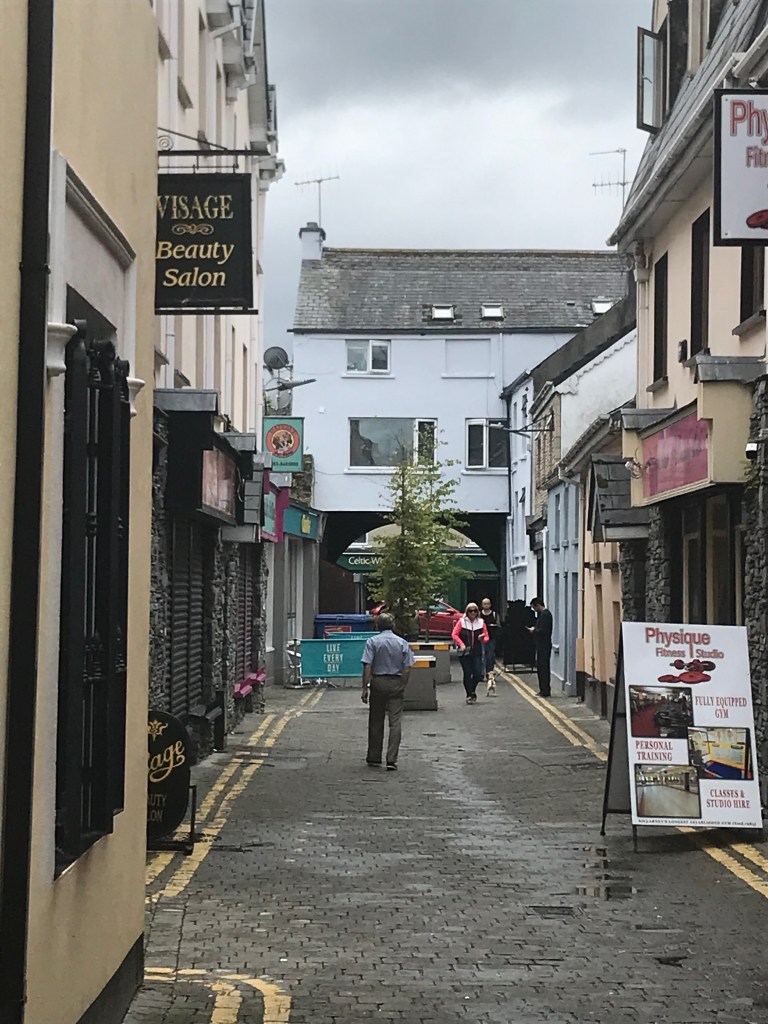
George and Sarah married neither in the Catholic chapel, nor the massive new cathedral, but in the Church of Ireland parish church, around the corner on Main Street, 300m in the opposite direction. George had moved symbolically away from the Catholicism of his youth to the Protestantism of his future wife.
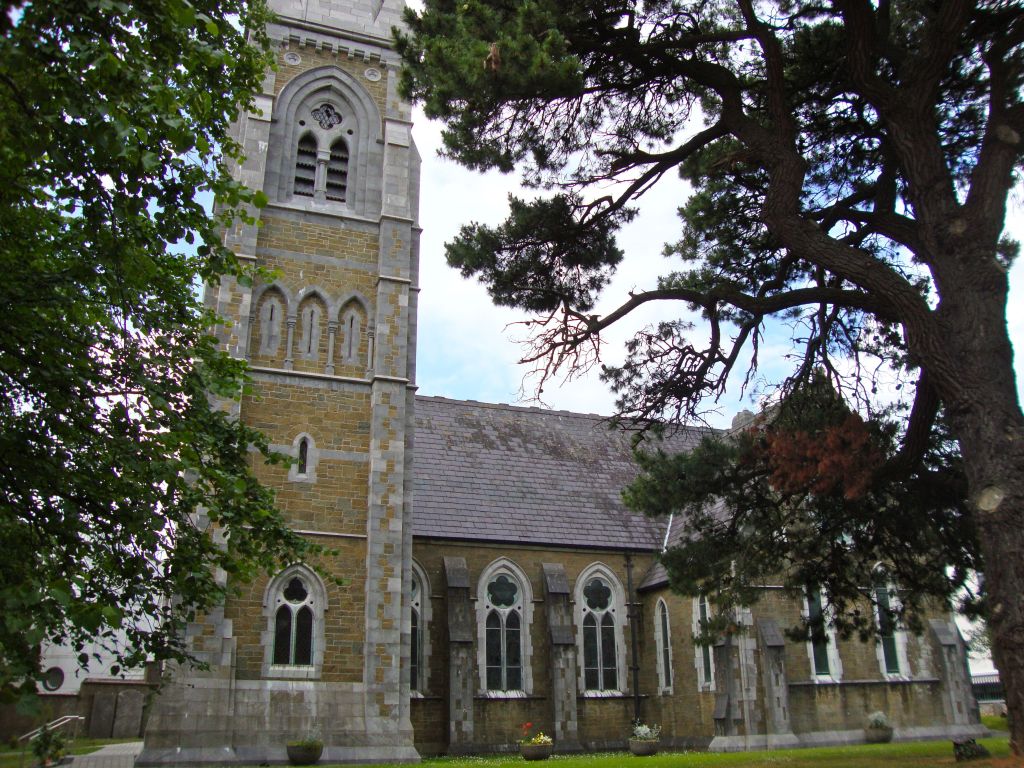
Though smaller and less imposing, the COI church is older and arguably more attractive than the Catholic cathedral, and though commonly called St Mary’s, it is also known as the Church of the Sloes (in fact Killarney, or Cill Airne, meansChurch of the Sloes, or Blackthorn). The current building dates from 1812, though various ecclesiastical structures had existed on the same site for centuries before that. During the nineteenth century, Killarney COI was rebuilt or repaired a number of times – in 1812, 1868, and again in 1888, the last of these being following an arson attack. Interestingly, despite the perpetrator of the crime being found, the repairs were not financed by legal compensation:
Rev Wynne later gave public notice of his intention to apply for compensation for ‘the malicious and wanton burning’ of the church (Belfast News Letter, 1 June 1888) but such action was opposed by the Protestant parishioners on the grounds that ‘the Protestant and Catholic people of the parish are on the most friendly terms’.
Murphy and Chamberlain, The Church of Ireland in Co Kerry, 2011. p.129
Clearly the traditional enmity between Catholics and Protestants in Ireland was neither universal nor consistent. In Killarney, at least, there was (and is) a degree of friendship and mutual acceptance despite the difficulties of the last few hundred years.
Killarney Church of Ireland, being Protestant, has never had more than a relatively small congregation, but from the end of the 1700s when Killarney was first emerging as a popular tourist destination, to the present day, the congregation has been swelled, particularly in the warmer months, by tourists, many of whom are from England. At the consecration ceremony in 1870 after the second rebuilding of the church, Henry Arthur Herbert junior of Muckross House stated, “the Protestants here are considerably few. It [will] be hard … to keep up so large a church for tourists,” but he hoped ‘the tourists will do their part.” (quoted in Murphy and Chamberlain, p.128)
Aghadoe Church
Although it would appear that Sarah and George Byrne were married in the Killarney church, their first two children, Hannah (b.1859) and George (b.1860) were baptised at another Church of Ireland, at Aghadoe, a small community on the northern edge of Killarney. How and why George and Sarah came to be associated with Aghadoe Church is uncertain, but the geographical proximity of these two Protestant churches would suggest a close connection between them. Perhaps the young couple lived there for a time after their marriage. Although Sarah had been a “sextoness” at the Killarney church prior to her marriage, there is no record of her carrying out any official duties at the Aghadoe Church. However, certain other members of the Ruddle family appear as witnesses to marriages in the Aghadoe parish register, indicating that the wider Ruddle family were associated with the Aghadoe Church in an official capacity. Also, in 1843 Francis Ruddle married Jane Martin in the Aghadoe Church. He was one of Sarah’s older brothers.

The Protestant church in Aghadoe was a new church built in 1837 in the heyday of the Church of Ireland, but the religious significance of the area dated back a thousand years before that. Tradition has it that there was a monastery established in Aghadoe in the 6th or 7th century by St Finian the Leper, but the first written record of an abbey is from the 10th century recorded in the Annals of Innisfallen. Samuel Lewis, in “A Topographical Dictionary of Ireland” (1837) writes:
The annals of Innisfallen state that a son of O’Donoghue was buried in an abbey founded here by him, which was standing in 1231. The only traces of its ancient dignity are the ruins of its cathedral, and the archdeaconry of Aghadoe.
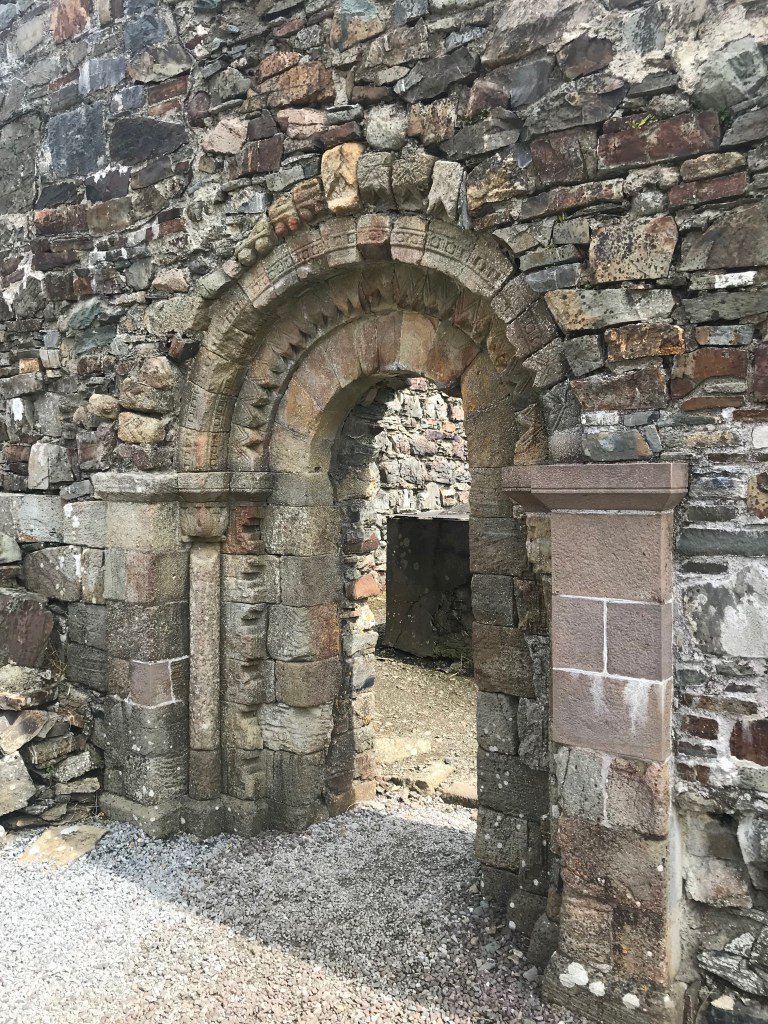
The town of Aghadoe, like so many other places in Ireland, was sacked in the 1650s by Cromwell’s forces. Though ostensibly a religious crusade to crush the perceived evils of Catholicism through destruction of monastic communities throughout Ireland, Cromwell’s agenda was largely political, not religious, and he had little interest in replacing the Catholic religious community with a Protestant church. That would not happen till nearly two hundred years later when the existing church building in Aghadoe was constructed a kilometre or two down the road from the few remaining ruins of the old monastery. Nowadays, however, neither religious persuasion has a functional church building in Aghadoe: the Catholic is in ruins, and the Protestant is derelict and boarded up.
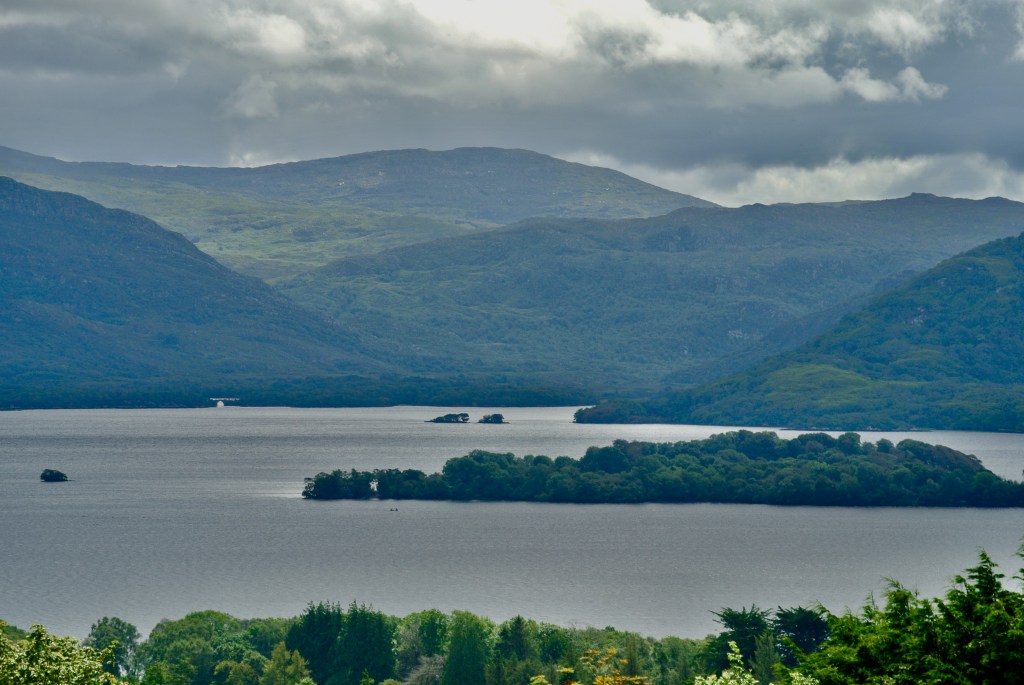
The Aghadoe Church of Ireland, when it was built in 1837, was in response to a request from the local landlord of Aghadoe House, who had approached Bishop Knox in 1834 to build a parish church “for the convenience of the community,” witness to the growing numbers of Protestants in the area. Lord Headley donated the land on which the church was built, in one of the most beautiful locations in Kerry, surrounded by green fields enclosed between stone walls and dotted with majestic old trees. From Aghadoe there are wonderful views over the Killarney lakes to the MacGillicuddy’s Reeks.
Lord Headley, whose real name was Charles Winn, was one of the benevolent landlords of the nineteenth century, at a time when there were many who had little regard for their tenants, seeing them as little more than a source of income, or as a nuisance. Headley, on the other hand, made huge efforts to improve the land under his control, and the lives of the tenants who lived there. Samuel Lewis, in his 1837 Topographical Dictionary of Ireland, wrote the following about this local member of the Anglo-Irish gentry:
Lord Headley, in 1826, … took the estate (Aghadoe Parish) under his own management; the farms, previously consisting of small portions of land held under middlemen by cottier tenants, were surveyed and improved upon an arrangement adapted to the mutual benefit of landlord and tenant, and let on leases of 21 years in portions varying from 100 to 200 acres, with stipulated allowances for building comfortable farm-houses, making fences and drains, and drawing the requisite quantities of lime for the improvement of the soil. Several miles of new road have been constructed, and extensive plantations made solely at his lordship’s expense. The hovels formerly occupied by the cottier tenants have been superseded by good farm-houses built of stone and roofed with slate; attached to each are orchards and gardens, and the whole face of the district presents an appearance of improvement. Lord Headley has a pattern farm of considerable extent adjoining his demesne, and has erected a splendid villa in the Italian style of architecture, commanding an interesting and extensive view over the great Lower Lake of Killarney; the approach is by a small but elegant bridge across a ravine, leading from the entrance gate and lodge, which are both in a corresponding style of architecture…
There is at present neither church nor glebe-house: the ancient and much used burial-ground adjoining the ruins of the cathedral of Aghadoe has been enlarged by the addition of a slip of ground given by Lord Headley. It is in contemplation to erect a church on a site to the west of the ancient cathedral, presented by Lord Headley, who has also contributed £100 towards a subscription now in progress for this purpose, and at present amounting to about £700, to which the archdeacon, who has appointed a curate, subscribed £100, and the Countess of Rosse, £50.
Headley, a Protestant, and from the descriptions of him a genuine Christian in the biblical sense of the word, seems to have been much loved by his tenants, and it was no doubt this appreciation that lead to the growth of the Church of Ireland in the area, leading to the decision to construct a church for their “convenience.” Kindness and generosity have always been a much more effective way of winning converts than force, even if some would say that this is simply bribery. The proposed church was built in 1837 (the year Samuel Lewis published his topographical dictionary) and opened the following year, and it would seem that our Ruddle family was associated with it from the early days. Sarah Ruddle was a child (probably around 6) when the church was opened. More than twenty years later, as a young mother, she would have her children baptized there. Of the beginnings of the new church Murphy and Chamberlain write,
An early visitor to the church was Lady Chatterton who in 1838 attended service there, ‘We had the advantage of a friend’s comfortable pew. The window was open close to it, and admitted the sweet fresh breeze from the lakes’. Before continuing her journey after service to Lord Headley’s ‘beautiful gardens’ where Lord Headley would proudly show Lady Chatterton an ogham stone in his grounds, she remarked on the neat and quiet churchyard, ‘as yet unoccupied by the dead’ (Chatterton, Vol I pp230-231). Lord Headley would be laid to rest there just two years later.
Murphy and Chamberlain, The Church of Ireland in Co Kerry, 2011. p12
The first time I saw Aghadoe Church was in the midst of a summer downpour, and we dashed around the churchyard looking at headstones for familiar names, but found none from our family. We came back another day when the sun was out, and wondered at our long dead ancestors coming on Sundays to this lovely place. The church was deconsecrated in 1989, and is now derelict and neglected.
The Kerry Revival and the Plymouth Brethren
There is no record of George and Sarah at either the Killarney or the Aghadoe church after 1860. Their next child, James, was born in 1865 or 1866, but neither I nor his granddaughter, Barbara Fromberg, who lives in Sydney, have been able to find any record of his baptism at either church, or elsewhere for that matter. They had another son, Richard, born in 1871, whose birth is registered in the Civil Records but not in any church records that survive. All three of the Byrne boys would emigrate to Australia, with Richard the last to leave.
The reason, I suspect, that the Byrne family disappeared from the Church of Ireland records after 1860 was a Christian “awakening” that occurred in 1861, which blew a fresh spiritual wind through the Church of Ireland in Kerry, but which ultimately led to many families leaving the church to join the Plymouth Brethren. The three Byrne sons, after their migration, were all involved to some extent with the Brethren church in Australia, which is strongly suggestive that their family was one of those that defected from the established church during the days of the revival.
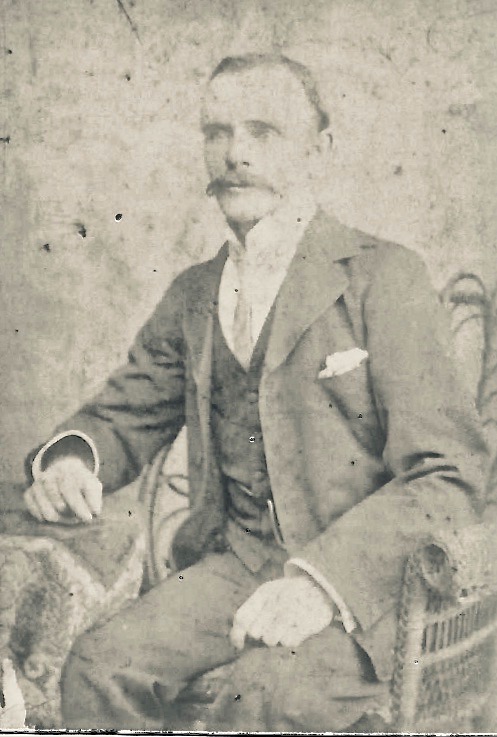
Sadly, George Byrne, the Catholic turned Protestant, turned non conformist, died in 1872 at the age of around 45, leaving Sarah as a young widow with four children, the oldest, Hannah, aged 12, and her youngest child, Richard, just a toddler. My knowledge of the years that followed are vague. I have found no record of her firstborn, Hannah, after her baptism. I do know that her first son, my great grandfather, was apprenticed to a merchant in Killorglin For five years and that in 1882 he would emigrate to Australia. Her second son, James, followed sometime later. Sarah died in 1890 in Tralee, with her third son, 19 year old Richard, at her side. She was around 58 years old. Richard migrated to Australia soon after, in around 1892.

How and why Sarah and her son Richard came to be living in Tralee is hard to know. Her death record lists her occupation as housekeeper, so it may have been for work that she moved. She was, after all, a widow with a family to support. However, her church involvement may also have been a catalyst, since the Brethren movement was stronger in Tralee, and offered more support to a widow than she could find in Killarney.
But I will relate the story of the Plymouth Brethren in another blog.
 Forgotten tales
Great bit of research David. Will my ‘book of Byrne’ ever be complete?
Thanks Barb, for ploughing through all this. It’s a long article, and could have been longer, as I gradually accumulate more historical information from that time. Frustratingly, the objective facts of the Byrne and Ruddle lives are still so scanty. I have taken some liberties here as you can see, especially with my assumption that the Byrnes were Catholic. No way I can prove it but it seems the most likely scenario. What do you think?
Apologies David in being something of a Tardy Barbie in getting back to you re the Byrnes being Catholic. My thoughts are that William was in fact Protestant and was baptised on 27th July 1801 in Church of Ireland, St Audoen, ( Dublin). This William was the son of George and Mary Byrne (possibly nee Payton). The dates work, then again dates can be misleading. If he is indeed the father of ‘our George’ then our George was the first born of 7 children of William and Johanna. Spelling on the other children birth/baptism is either Byrne or Byrns.
The terrific information sent by the wonderful Michael, indicates that Francis Ruddle was in fact Sarah’s brother. Francis / Frank sadly died in the Killarney workhouse, no pensions for schoolmasters then.
You may well be right. I have started digesting the information that Michael sent, and it corresponds with what you have said. I have to think more about it. Then there will be a new blog coming on… Both the Ruddle and Byrne families remain something of a mystery, but maybe Michael has given us a way forward in answering some questions.