
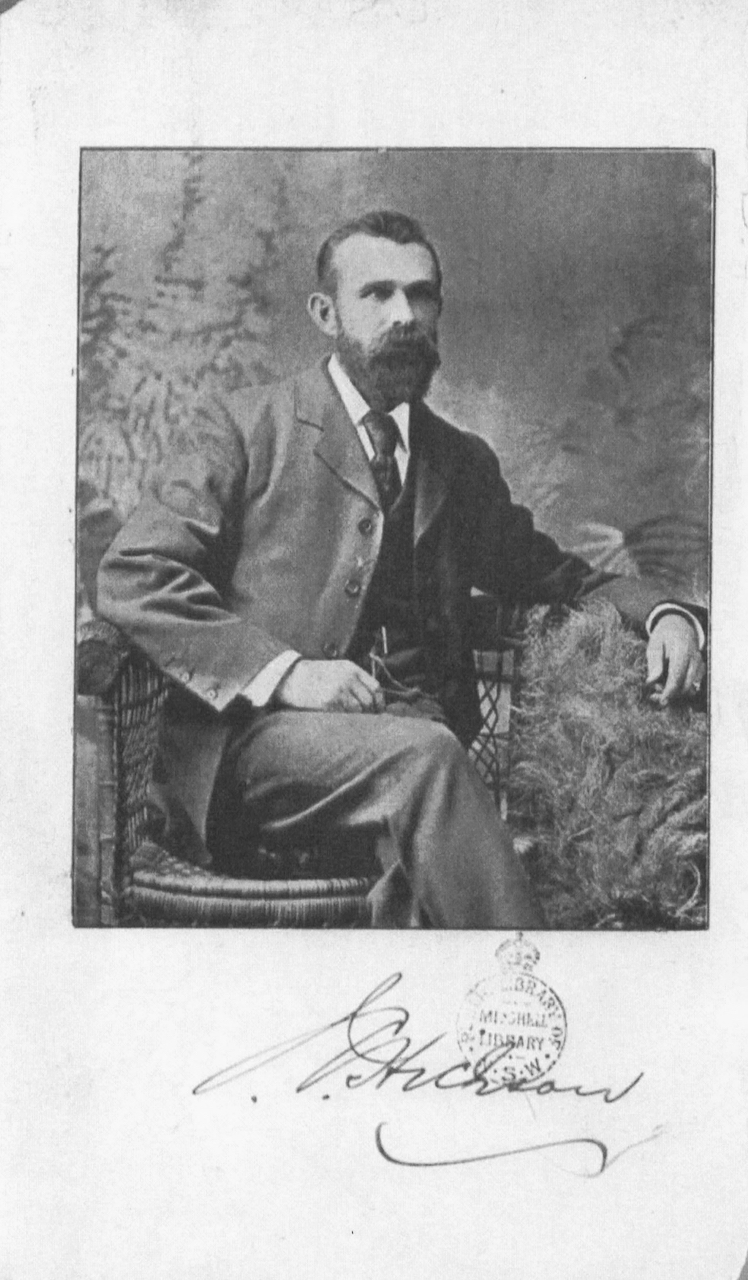
My Irish great great grandfather wrote a book called Notes of Travel, in which he recorded impressions of a journey around the world with his daughter, Alice, in 1893. Alice was 20 years of age, born in Australia, unlike her father. John’s sudden and unexpected decision to undertake this journey just a few months after his wife, Martha, had had her tenth child was apparently motivated by circumstances of Alice’s life which remain shrouded in mystery – what is known is that he desired to remove her from the advances of a suitor whom he disliked. Journeys around the world were not a quick affair in the 1890s: John must have felt the six months they would be travelling would be enough to make Alice forget him. But that is another story.
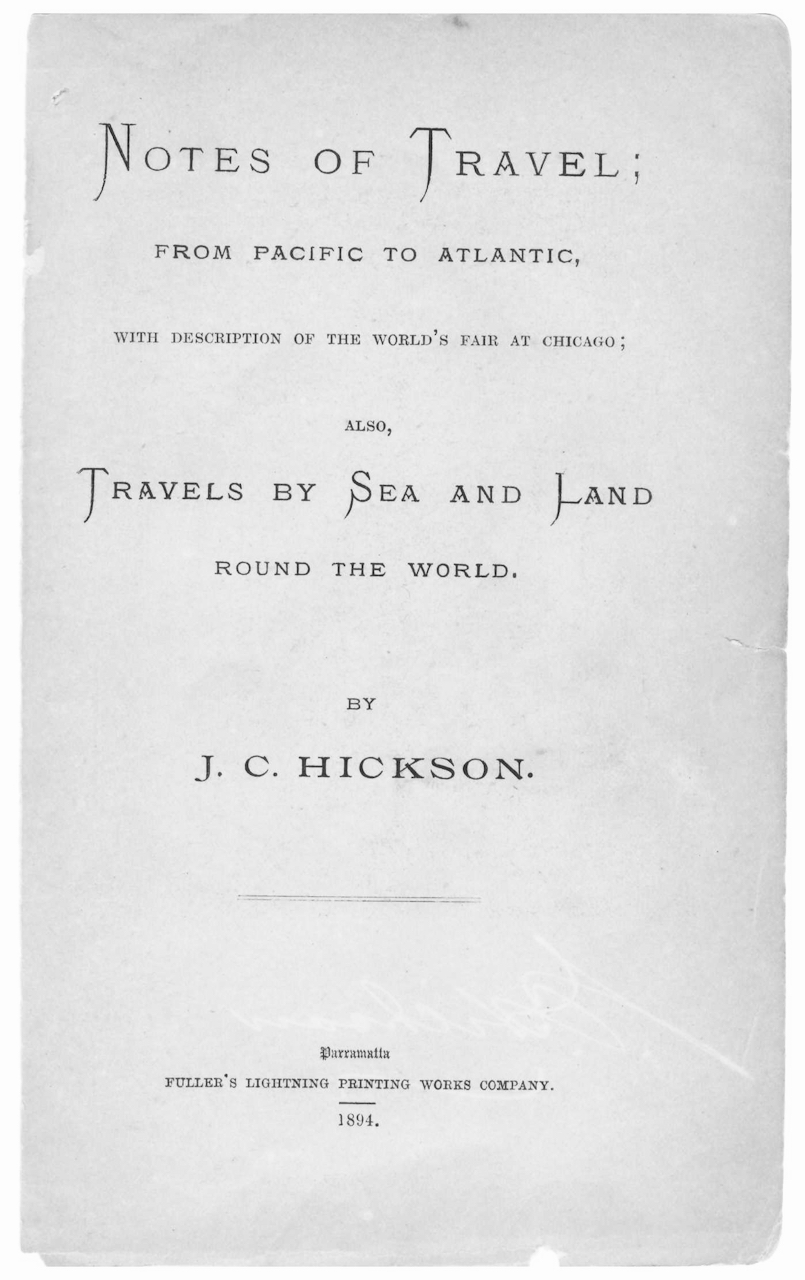
One of the many stops on their journey was Ireland, to which John devotes a whole chapter of his book. He writes about various locations they visited, from Queenstown (Cork) where they disembarked, to Killarney, Kenmare, and Sneem on the Ring of Kerry and finally Dublin and Belfast whence they departed for Scotland. But it is his account of Killorglin that has been of special interest to me as I try to reconstruct his childhood, and that will be the subject of this blog.
John was born in 1848 when the terrible Irish Famine was at last beginning to lose its grip on that green and pleasant land. Those years of suffering and death, which must have so profoundly impacted his parents and older siblings, do not feature in John’s writings. He depicts his childhood years rather as a happy time, though there is a certain sadness in the nostalgia of his writing, as all of us who have left our native places have felt at one time or another, especially when we return briefly to our first homes.
Most of John’s childhood was spent in Killorglin, though he spent a period, it would seem, in Sneem, on the other side of the Iveragh Peninsula, which he also remembers with nostalgia, even if the Sneem of the 1850s was a colourless and impoverished place bearing little resemblance to the delightful village of brightly coloured houses and shops that greets the visitor today. He left Ireland shortly after when he was around 21, in 1869 or 70, and did not see his native land again for 23 years when he returned with Alice, who was then about the same age John had been when he left. Much had changed by the time he came back; his book contains reflections on some of those changes, interspersed with his reminiscences of childhood.
What follows are some extracts from his book, which I hope will provide something of a window into the Killorglin of the 1850s and 60s.
Killorglin on the banks of the Laune
On the banks of the Laune, a river flowing from Killarney Lakes on its way to the sea, stands the old town of Killorglin, my native place, and where I spent my happy boyhood days. This town in the old days was a quiet unfrequented spot; but now the march of progress has extended railway communication to it. We accordingly went by rail to Killorglin to note the changes produced in thirty years.
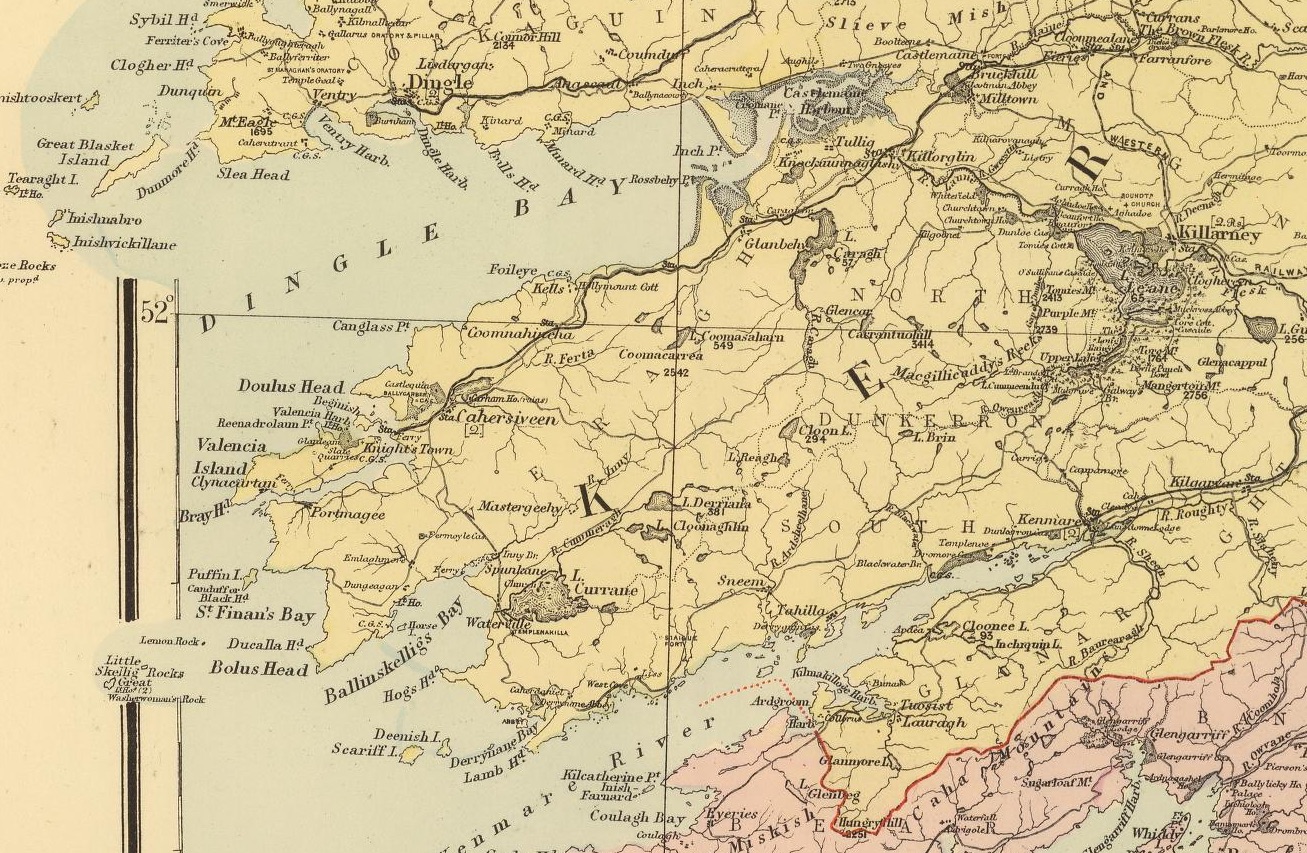
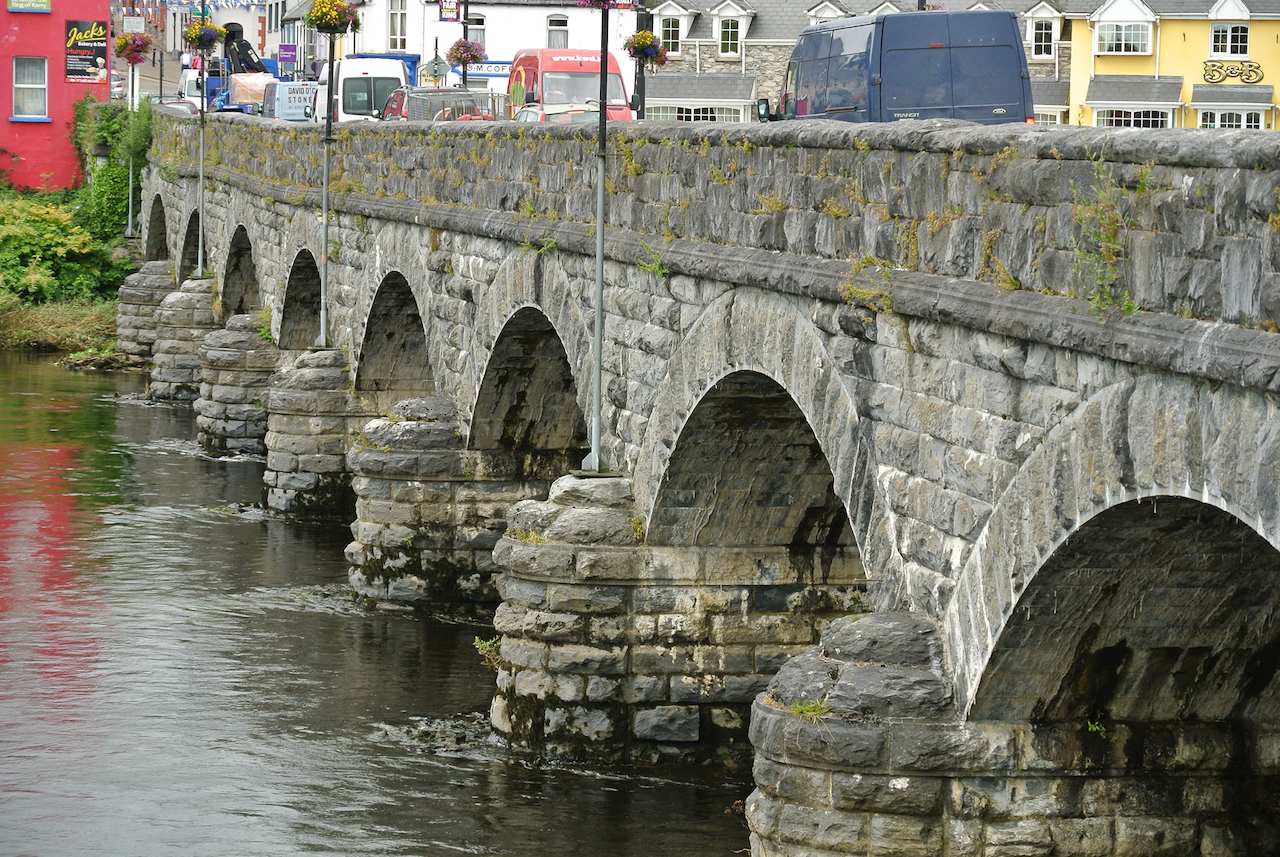
The Laune River flows from Lough Leane by Killarney westward then northward, through Killorglin toward Castlemaine Harbour, the most inland and easterly part of Dingle Bay. It forms something of a barrier between mainland Kerry and the Iveragh Peninsula which sticks out west into the Atlantic. The famous Ring of Kerry roughly follows the perimeter of this promontory of land, with Dingle Bay to the north and Kenmare Bay to the south. Forming the backbone of the peninsula is the MacGillicuddy Reeks, which include the windswept heights of Carrantouhil, Ireland’s highest mountain. Off the western tip are the skelligs which were once the site of one of the most remote and inaccessible monasteries in the world, but which are now famous mainly for their appearance in one of the Star Wars films a few years back.
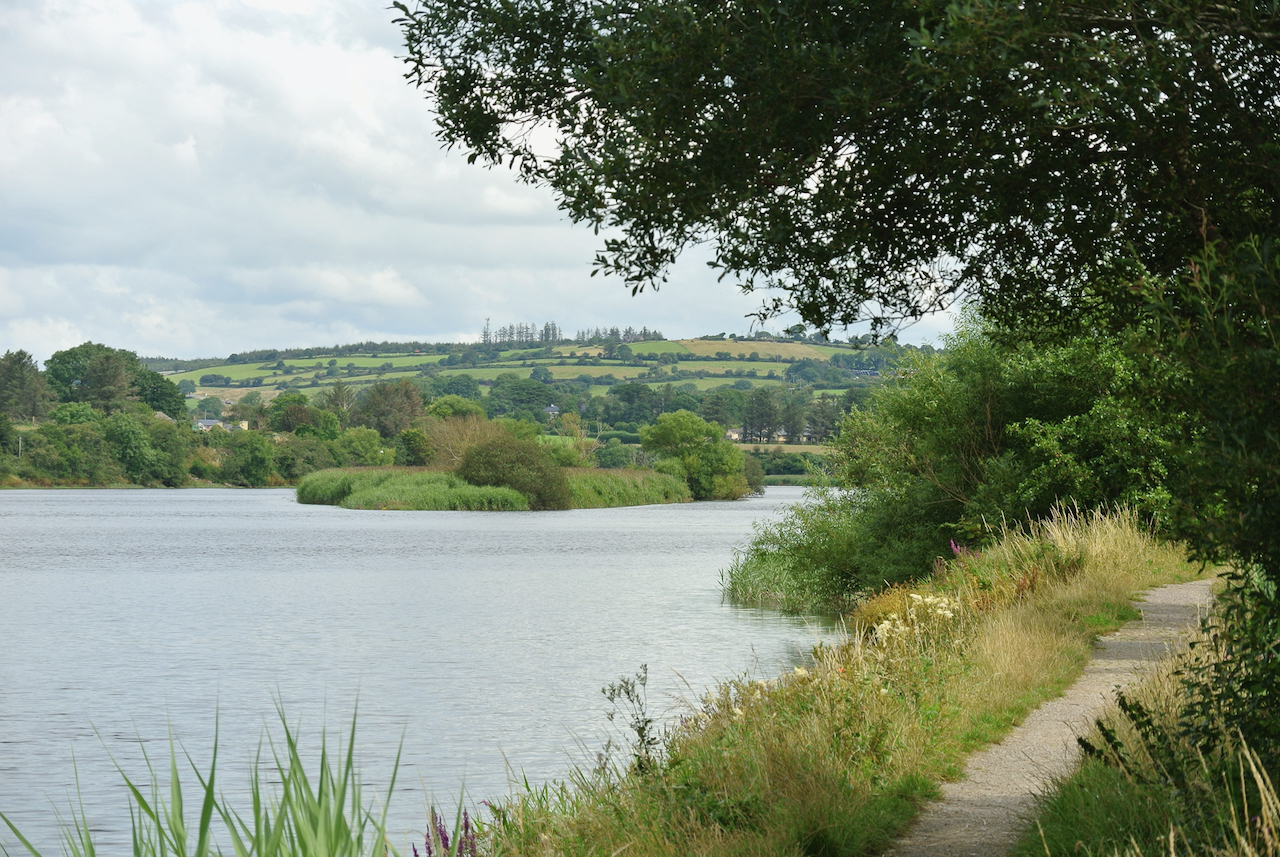
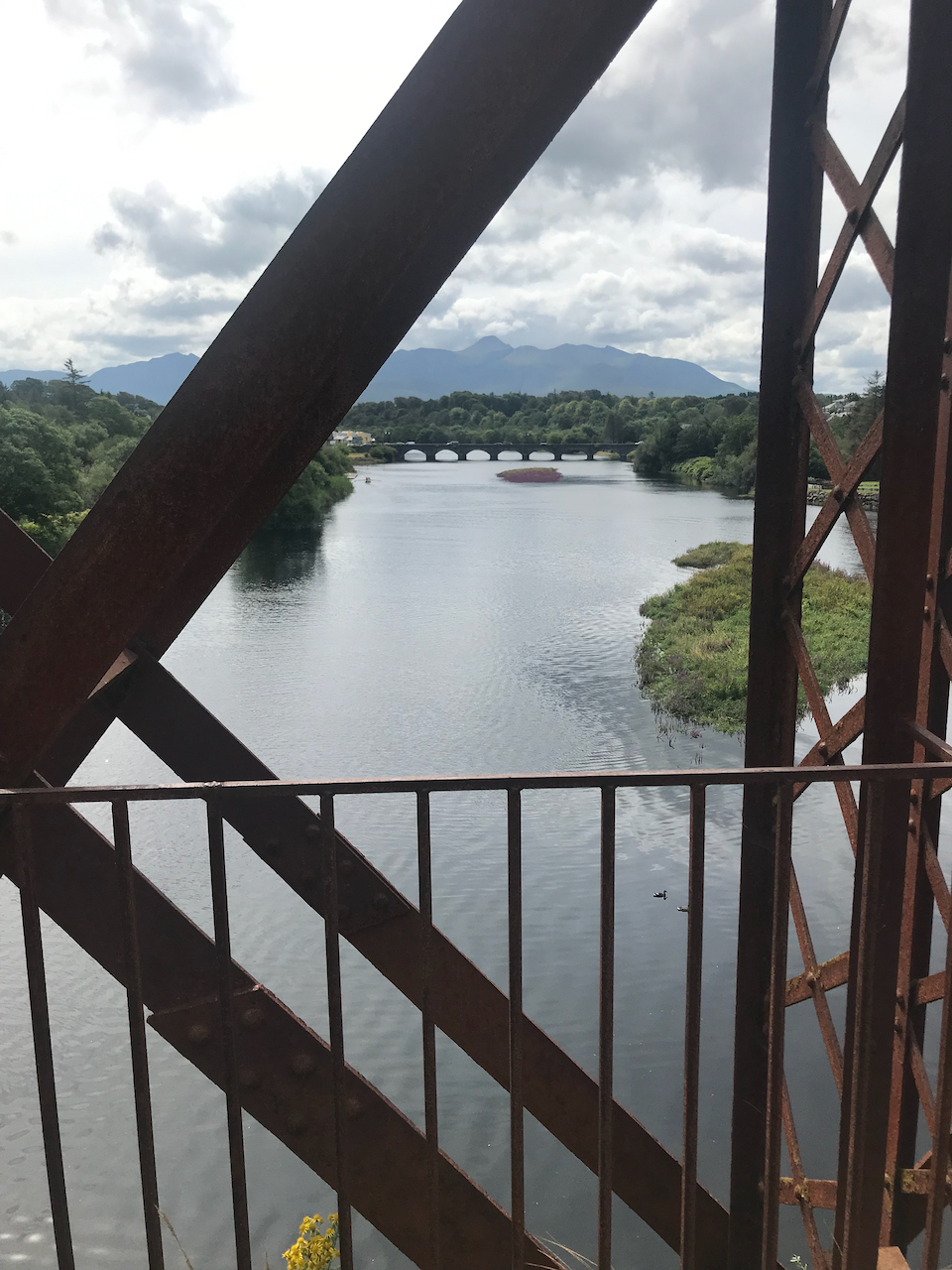
When the Hicksons lived in Killorglin there was just one bridge across the Laune, a low wooden structure, which was damaged in a high Spring tide in around 1885, some 15 years after John had left. A new road bridge was hastily constructed out of grey stone, and that bridge remains to this day, now heavily trafficked with cars, trucks and tourist buses. That same year a second bridge was built quite close by, an iron railway bridge, a viaduct, which brought the railway from Tralee to Killorglin and further to the farthest reaches of the peninsula. When John came back to Killorglin in 1893 they arrived at the town via this new railway bridge, a marvel of modern engineering to John, and enough to render him a little disorientated it seems:
We crossed the river by a very fine iron bridge, but I did not know the spot where many a time I patiently sat on its banks with a rod and line endeavouring to tempt a luscious trout with a worm bait. Landing at the station and looking around, I felt like a stranger in my native place.
He had been gone, after all, for 23 years, and the “march of progress” had come to Killorglin. But he had not forgotten his younger days, when he was clearly a keen fisherman. I doubt that he had pursued this passion in Australia, so preoccupied he had become with building a new life in his new home. Having said that, there is good fishing in Sydney Harbour, close to where John lived out his Australian life, not to mention the coastal rivers and lakes of NSW’s Mid North Coast, which were also prominent in John’s Australian life, since that is where he sourced the native timbers from which he made his fortune. But nothing in John’s mind could compare with his beloved Laune river, and the “luscious trout” he had hooked in his formative years. A recent publication about Killorglin’s more recent history centres its stories on this lovely river.
According to King’s History of Kerry, the Laune derives its name from the elm tree, An Leamhán, draining Lough Leane from Dunloe to Killorglin, past Beufort and Ballymalis, and is famous for its salmon fishery… The Laune is approximately 14 miles (23 kilometres) long and carries most of the rainfall from the MacGillicuddy Reeks, Na Cruacha Dubha, Ireland’s highest mountain range… There is a reference to a Viking force defeated on the banks of the Laune in 915AD, a reference that conjures up images of the Vikings’ iconic long boats streaming into the estuary, only to be rebuffed by the defenders of the place at the time.
Killorglin’s River of Memories, pp6-7
Killorglin in the nineteenth century
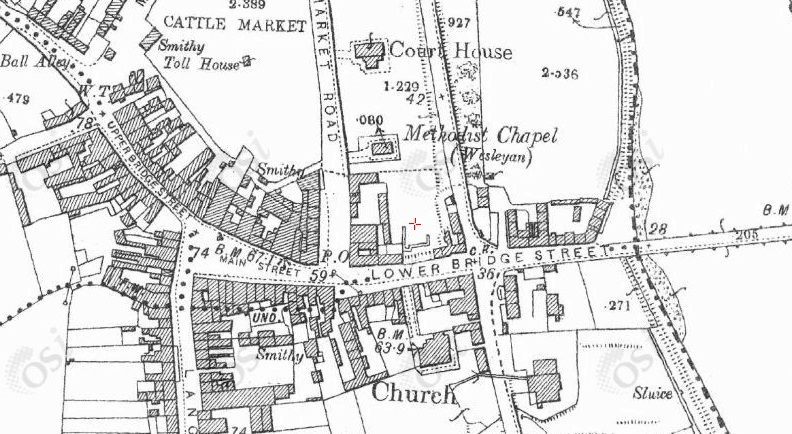
Though Killorglin is a relatively small town today of little more than 2000 residents, when Richard and Mary Hickson were raising their family, in the first half of the 1800s, it was less than half that size (John describes it as a “quiet unfrequented spot”). According to A Topographical Dictionary of Ireland, published in 1837, the village comprised just under 900 souls. Here is an excerpt:
The river Laune … contains fine salmon, and is navigable for vessels of 180 tons near to the village, which is a short distance from its mouth. The village comprises 163 houses, and close to it is a bridge on the great line of road. It exports corn and salmon, and imports iron, timber, and salt. Fairs are held on Aug. 11th and Nov. 19th; the former is called Puck Fair, at which unbroken Kerry ponies, goats, &c., are sold, and a male goat is sometimes ornamented and paraded about the fair. It has a penny post to Cahirciveen, Tralee, and Newcastle; it is a constabulary police station, and has petty sessions monthly…
The principal seats are Annagarry, the residence of R. Blennerhasset, Esq.; Ardmoniel Cottage, of R. Rae, Esq.; Clifton Cottage, of F. S. Walker, Esq.; Altavilla, of J. Morrogh, Esq.; and Annadale, of C. Colter, Esq.
The living is a rectory, in the diocese of Ardfert and Aghadoe, and in the patronage of the Crown… The church is a plain structure with a square tower, erected on land given by the late Rev. F. Mullins…
In the R. C. divisions this parish is the head of a union or district, including also the whole of Knockane, except Glencare, and has a chapel built on an acre of land given by the late Lord Ventry, and lately much improved and ornamented. Here is a meeting-house for Methodists. About 60 children are educated in a charity school, and about 200 in private schools. At Droumavalley are the ruins of an old church, to which a large burial-ground is attached; and there are remains of the old church of Killorglin at Dungeel, also extensive remains of the castle of the Knights Templars, which till lately was inhabited.
This, then, was the Killorglin in which John and his many older siblings grew up: a market town on a river navigable to the sea via Castlemaine Harbour and Dingle Bay, exporting corn and salmon, with two major fairs a year, one of which, the famous Puck Fair, continues every August to this day; a mainly Catholic population, dominated by an Anglo-Irish aristocracy, notably the Blennerhassetts; an Anglican (Church of Ireland) church of fairly recent construction (1816) which the Hickson’s attended, and a Roman Catholic Chapel (the RC church of today, St James, was built in 1891 many years after the Hicksons left), but also a Methodist meeting house, the legacy of John Wesley’s evangelistic travels a hundred years earlier; a “charity school” as well as “private schools” – one of which witnessed the education of John and the other Hickson children. I wrote about John’s memory of his school days in my last blog article.
I have little knowledge of the Hickson generations before John’s parents Richard and Mary, or how long the Hicksons had lived in Killorglin. There were Hicksons scattered around Kerry, mainly, from what I know, on the Dingle peninsula to the north. Records of the aristocratic branches of the Hickson family are more visible than the “commoners” like my family. Mary Hickson, whose mother was descended from the Blennerhassetts, was a notable Kerry historian in the nineteenth century, and a contemporary of the Killorglin Hicksons. However, Don Robinson, another descendant of John Hickson (and my father’s cousin), who was a far more thorough historian than me, was not able to find anything in her writings (mainly the Old Kerry Records) which indicate the connection of “my Hicksons” to the many others. The name suffices, plus the assertion by John in his book that The Grove, a big house in Dingle, was the “ancestral seat,” though exactly what that means is unclear; there were many big houses in Kerry which were owned or occupied by Hicksons over the centuries. Exactly what the Killorglin Hicksons’ connection was to the The Grove, is never enlarged on by John.
Killorglin friends
John was only 21 when he left Killorglin, so his memories are more nostalgic reminiscences than factual history. His father and his two older brothers were nailors, blacksmiths, though I believe his father became a storekeeper in his later years, no doubt when blacksmithing became too physically demanding. John went to school with a certain Roger Martin, who became a well known merchant in Killorglin in the years after John left Ireland. His store still stands in the village, though it is under different ownership. I have wondered if Roger’s father was also a merchant, and if Richard, John’s father, may have worked for him in the 1860s before he left with William, John’s older brother, for America. The Martin’s appear to have been good friends with the Hicksons, as John remembers in his travel memoir:
I met many friends who had known me in youth, but found many changes in faces and places; and of the companions I once knew, some had left, some were dead, and a generation had risen up “who knew not Joseph.” There was one whom I missed intently, my old and valued friend and companion, the late Roger Martin; and for many years in contemplating my visit to my old home, the pleasure of his companionship and his warm-heartedness would loom up as the central feature.
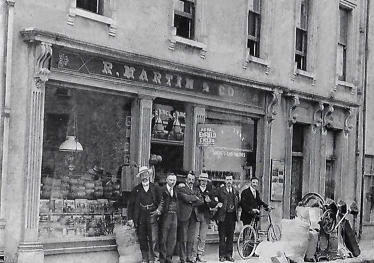
John, it seems from this, had been thinking about a return to Killorglin for many years, and seeing his old friend Roger was something he anticipated with pleasure. But as Roger had passed away previously, their reunion was no longer the “central feature” of John’s journey with daughter Alice, which again bears witness to another, more obscure, reason for their sudden trip around the world, as I mentioned above. John and Alice did, however, meet up with the wider Martin family, as well as the Carters, who were his mother’s kin. He mentions another family too in his writings, the Leslies, but I know nothing of their connection with the Hicksons. It seems likely that this Leslie family, though related to the well known gentry Leslies of North Kerry whose family seat was Tarbert House, were, like the Killorglin Hicksons, ordinary middle class folk, also part of the Anglo-Irish minority in Killorglin. It was a time when there was growing antagonism toward the Anglo-Irish among the majority of the population, which must have played a part in the Hicksons’ decision to leave their native land and seek a life on the far side of the world. Despite that, John cherished memories of his hometown for the rest of his life.
Reminiscing
John Hickson was a nostalgic character. He liked to write in verse, perhaps a reflection of his Irish roots. In 1893 on his return to Killorglin he wandered around his old haunts remembering the old days.
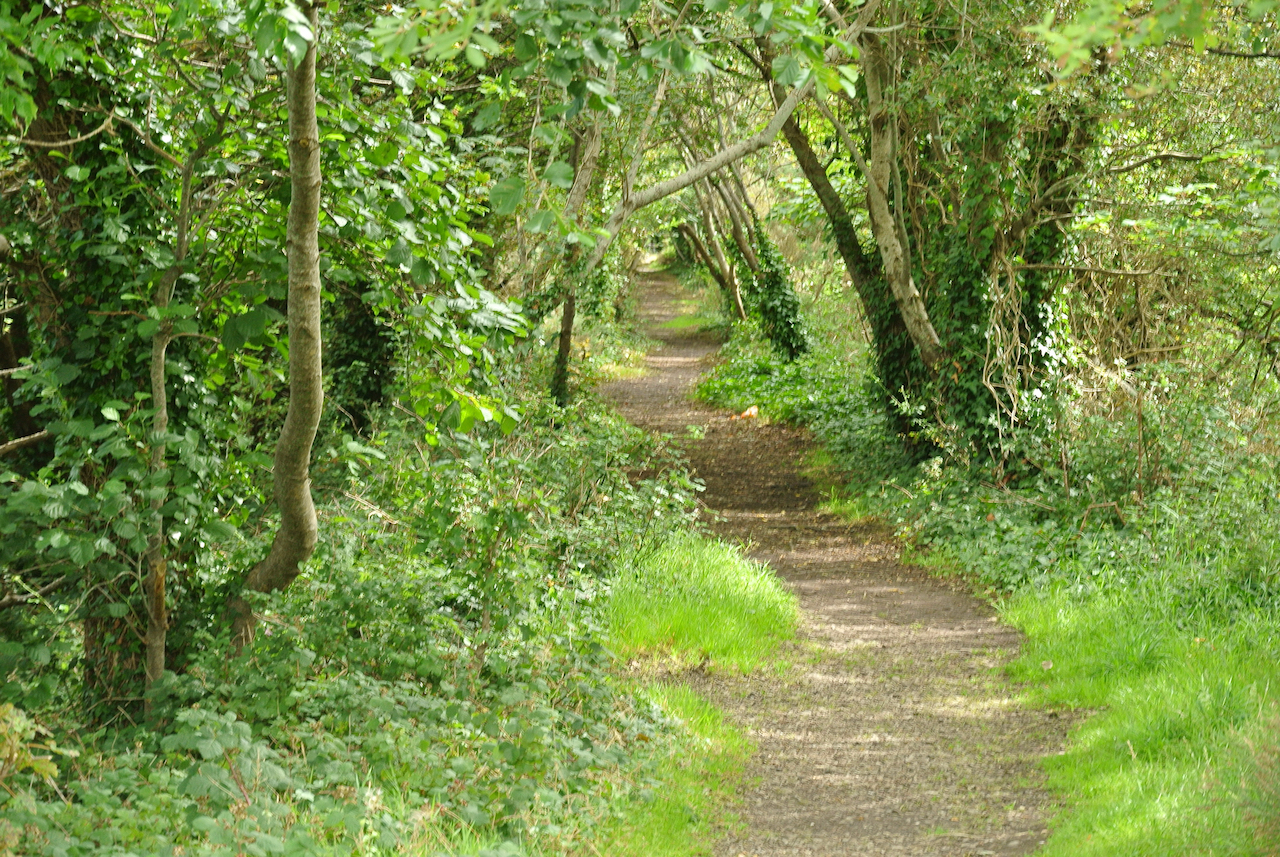
I saw the old scenes, stood on the hill over the old mill, and viewed the landscape o’er The Reeks in the distance and the broad river like a silver band winding in graceful bends through wooded dells, with a calm and pleasant lull. Many of the landmarks that were imprinted on my memory were gone; but walking along the roads I knew so well I saw the same old beechnut trees where we climbed for nuts, and also
There was the little well below,
Whose crystal waters fresh and cool
I often drank in sultry hours,
When through the grove in search of flowers
I sauntered idly after school
In those bright days long, long ago.I wandered thro’ fields, thro’ valleys and woods,
And each boy-frequented spot
That at the Antipodes haunted one,
And by none could be forgot;
And the primrose bank and the hazel dell
Soft memories woke as the evening fell.The old town that in early days to my youthful imagination seemed like a city, remains with little alteration, its fairs and markets and annual festival of Puck Fair still exists to mark its ancient customs, but many of the places and things most sacred in my memory were gone, and connecting them with those that had passed away, I felt the want and sighed for
The touch of a vanished hand,
The sound of a voice that is still.
The poem he wrote about his schooldays is full of reminiscing, much of it centred on the lovely river:.
When at one o’clock we started for the playground at the rear,
We at once commenced at “duck’s off,” marbles or at “hunt the hare;”
But we often slipped beyond it, to the river, near the school,
Where we watched and trapped the fishes that were swimming in the pool.Or we’d go a little father, to the pool where we used swim,
And we’d scamper off so quickly to see who’d first get in; –
Near the bridge that little island, where we then used sportively
Spend our hours of recreation, long since now has ceased to be.And the glen where oft we wandered, seeking ferns or a bird’s nest,
Near Tom Huggard’s kitchen garden, where the young twigs grew the best,
Which afforded hoops for girls, and supplied the master’s rod, –
Time has changed these haunts of pleasure where our young feet often trod.And again the spa well near us, where we oft our thirst did slake,
And beside its running water sat we elstrim boats to make, –
Still supplies its clear spring water which has never ceased to flow,
But a change is wrought around it that its face you scarce would know.Oh! the pleasant days we wandered by the lovely Laune’s green banks,
After school and Sunday evening, playing silly childish pranks;
Final resting place
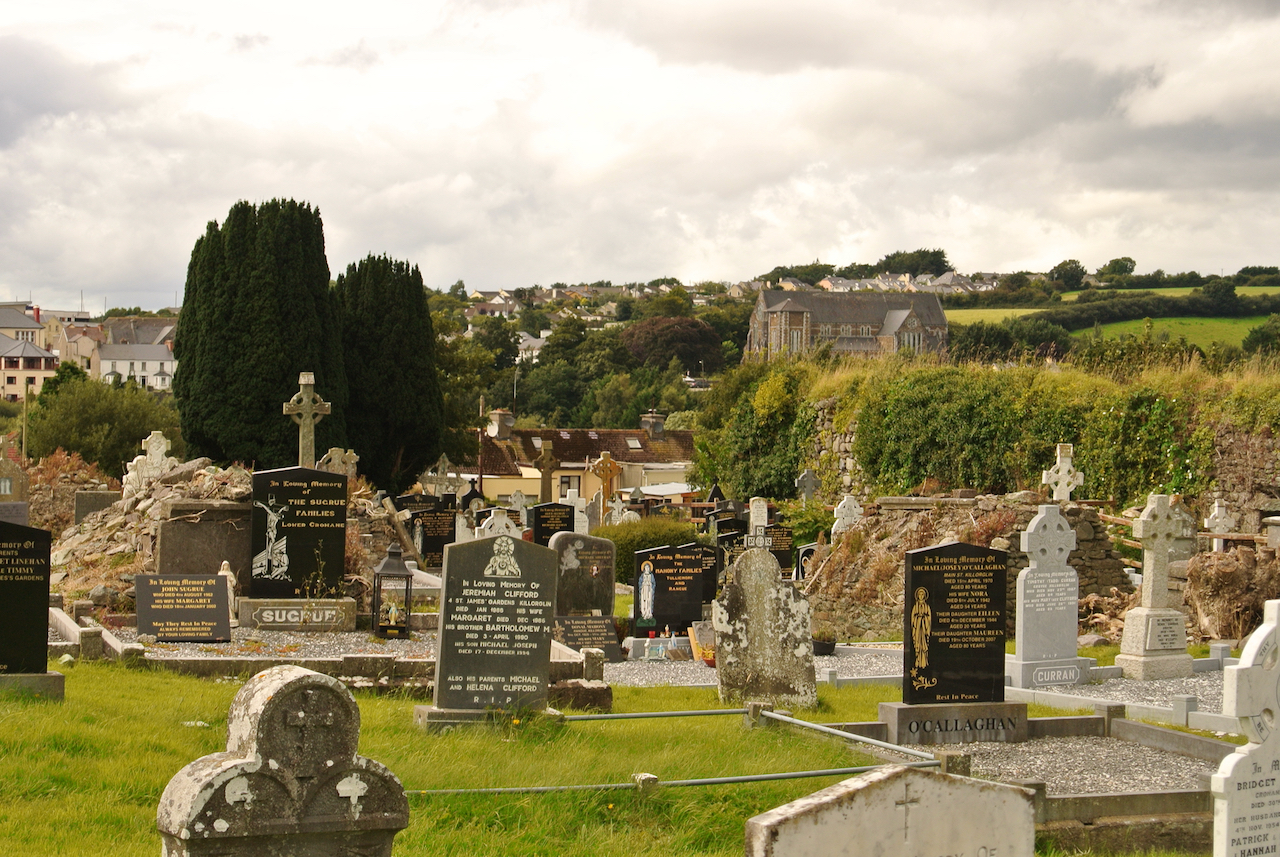
One of the places he visited was the cemetery, which my daughter and I also wandered around when we were there together in 2016. We searched in vain for any Hickson graves, but that is where John’s mother and some of his siblings lie buried, as well, of course, as his old friend Roger Martin:
Dromevalley, the necropolis of Killorglin, contains the dust of many dear to me: there lie some of my earliest and best friends, my faithful companion and schoolmate, R. Martin, and beyond all my dear mother, with some of my brothers and sisters side by side. Being the last of a numerous family who by circumstances have been scattered over the globe and whose resting places are widely asunder, while leaning on the ivy which overhangs my mother’s grave, the beautiful lines of Mr Hemans occurred to me: –
They grew in beauty side by side
They filled one home with glee;
Their graves are severed far and wide,
O’er mountain stream and sea.The same fond mother bent at night,
And kissed each sleeping brow:
She had each folded flower in sight.
Where are these dreamers now?
Day trip with old friends
The very last memory of Killorglin that John records in his book is of some of the spectacularly beautiful country in the vicinity,
One of our excursions during our stay in Killorglin was very enjoyable. We were invited by our friends the Martins, Carters and Leslies, to a picnic on the sands at Rossbeigh, returning to Cara Castle, where we stayed one night, and in the afternoon fished for trout in a beautiful hill-encircled lake of the same name.
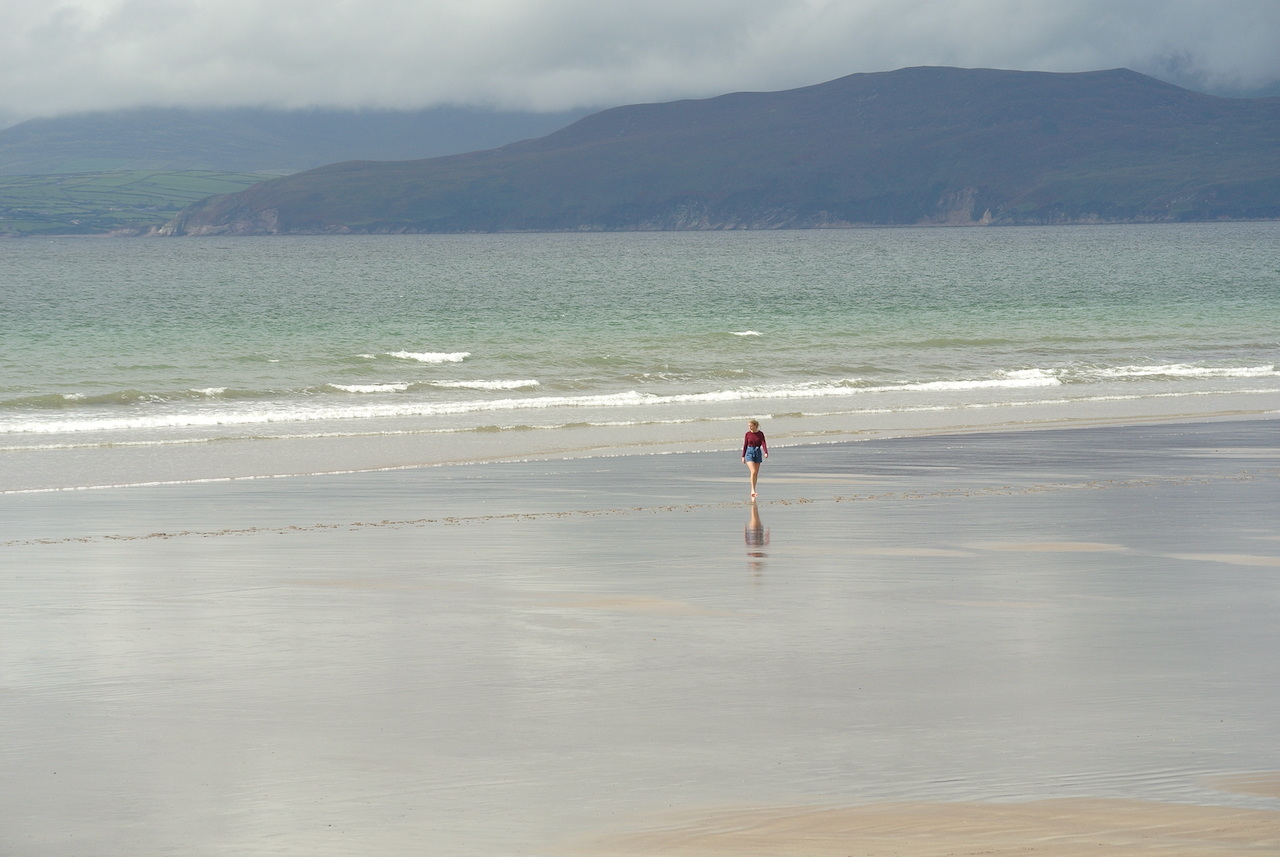
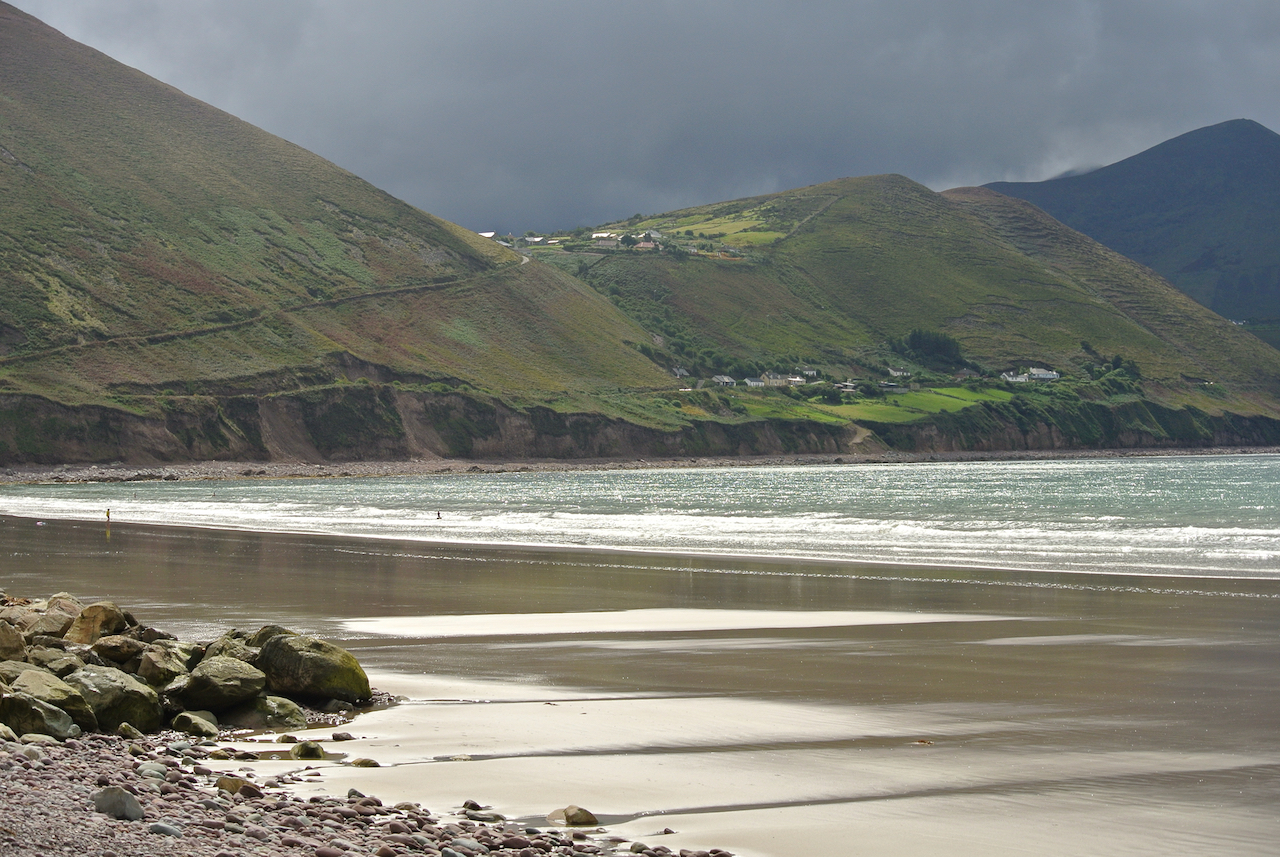
Hanna and I visited “the sands at Rossbeigh,” but we did not see Cara Castle or a “lake of the same name.” I suspect he was referring to Caragh Lake, and perhaps the castle where they stayed a night was the Carrig Country House, which according to its website was once owned by the Blennerhassetts. It is now a luxury hotel on the shores of Lough Caragh. I have been unable to ascertain who owned the house in 1893 when John and his daughter visited, or whether it was actually a hotel then. It had only been built in around 1850, which would suggest that in the 90s it would still have been in private hands, but if that was the case, how could the Killorglin group of friends have stayed there, unless one or other of them was related to the then owners.
There is no doubt that John Hickson had fond memories of his childhood in Killorglin, memories that he carried with him until he died in Manly (on the northern beaches of Sydney) in 1945, at the grand old age of 96. He travelled back to Ireland on at least once more in 1911, but may have visited again during the remainder of his long life. Ireland changed dramatically during the century he was alive, from British “colony” to independent republic. John no doubt read about the battles for independence from Britain, and the Civil War that followed with great sadness on the other side of the world. He was a firm Unionist, and a true Anglophile. He was never convinced by Irish Republicanism, though in retrospect, a hundred years later, it seems clear that he did not understand the level of resentment of his own countrymen – British domination was bound to fail eventually, as it did in so many places around the world. The old house that John remembered as the “ancestral seat,” The Grove in Dingle, though not destroyed in the Civil War like so many others of the Big Houses of Kerry, passed out of Hickson hands, and eventually was demolished. I have not been able to find any clear account of what happened to The Grove, but it no longer exists.
In his later years John chose to remember the Killorglin of his childhood rather than the place it had become. He loved it to the end, as have so many others who make up the Irish diaspora around the world. I have only had a few hours in Killorglin, and a few days in Kerry, and I have discovered these are places that are easy to fall in love with. Hopefully there will be more such times in the future.
All these thoughts I fondly cherish, for they always bring to mind
Pleasant memories of my childhood, which shall never be resigned
And while passing life’s dark valley ‘mid the din of worldly strife
They shall buoy my drooping spirit and shall fill me with new life…Though the time that has passed o’er it has much changed its dear old face,
Still I trust it’s for the better, for this is a pushing race;
But if all its scenes were altered, and time work as well it may,
Yet the thought of that old townland will not ever pass away.
Sources
Notes of Travel, John Hickson 1893
A Topographical Dictionary of Ireland, 1837
Killorglin’s River of Memories. https://issuu.com/killorglinarchive/docs/kas_book
First stop on the Ring of Kerry. http://killorglinringofkerry.com
Wikipedia article on Mary Agnes Hickson. https://en.wikipedia.org/wiki/Mary_Agnes_Hickson
https://killorglinarchives.com
https://reeksdistrict.com/explore/wild-lakes-and-rivers/caragh-lake/
https://carrighouse.com


Thank you once again for your stories on our Hickson Family .
Happy New Year from cousin Wendy in Upwey Melbourne 🙂
And a Happy New Year to you too, Wendy!
Especially enjoyed this new chapter o the Hicksons. I don’t remember you mentioning that Hohn ad written a book about his travels with Alice. What a treasure!
Well done for wading through another of my extremely long ramblings. And Happy New Year to you!
David this is fabulous. Really enjoyed it. What a thrill to have John’s book.
As we have discussed the mystery of his travels with Alice and the whispered rumour of her ruination at the hands of great uncle Richard, would he have spent so much time visiting old family and friends with a ruined daughter. I wonder. Though poor Alice doesn’t seem to get a look-in in John’s writings. Sadly it is not a movie and we will not ever get the answers, but what a movie plot could be made. Ooh could we make the 10th sibling in fact her and Richard’s child? Mills and Boon here I come. Only kidding.
I have a fondness for great aunt Alice, though you have said she was a bit of a grumpy old lady. The romanticist in me feels that Alice and Richard were each others ‘one true love’ and I am glad they eventually got together albeit for a short while.
The iron bridge at Killorglin fascinates me as the lady I met in Killarney who claimed to remember Byrnes blacksmiths told me they made some of the components of the ‘old iron bridge’. Her memory may be suspect because she did have dementia and would have been to young for her own memories. Perhaps a story she had heard from her family. Another one for the family mystery basket.
Anyway … great read. Congratulations.
I will also take this opportunity to wish you, Maria and your family all the best for the new year.
Cheers!
Barb.
Sent from my iPad
Hello, Another wonderful story. Thank you so much. I am not a Hickson but an Aldworth (Anglo-Irish family from Kilgarvan). But I enjoy your writings so much as, of course, the Aldworths have a similar history.
Do you have a blog? Would love to read their story
I started a blog but never posted anything . . . as yet. If I get it running, I will let you know!
“Cara Castle” was the home of the Eagars (Eusebius McGillycuddy Eagar) until sold to the Great Southern Western Railway in the early 1890s who turned it into a hotel “Caragh Lake Hotel” now demolished
Thanks so much for that information. Another question answered!