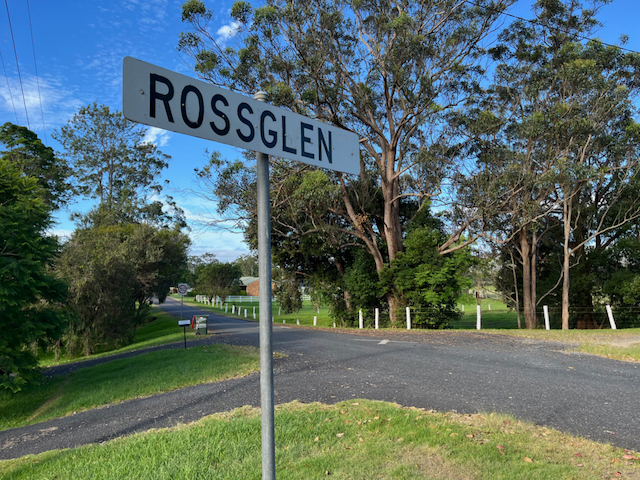
On the Mid North Coast of NSW there is a scattering of houses called Rossglen just to the west of the Pacific Highway as it crosses the Camden Haven River. Working as I do in Taree, but staying several nights a week 80km north in Port Macquarie, I drive past Rossglen most days, twice some days, and hardly a day passes when I do not spare a passing thought for my Ross ancestors who came some 160 years ago to the Mid North Coast, which at that time had not yet been given that name, being as it was at the edge of European settlement in NSW.
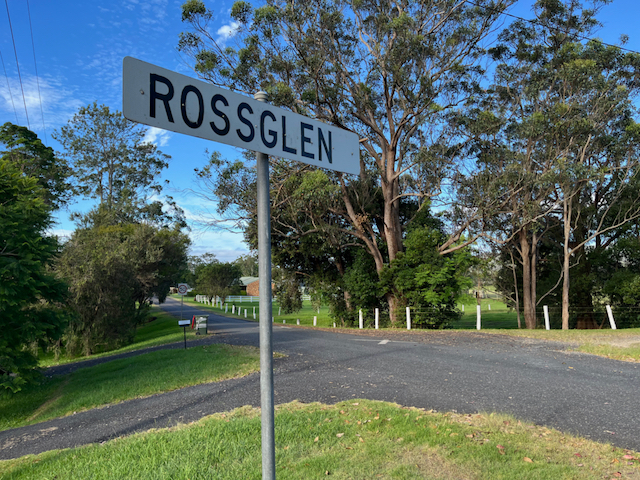
Having said that, my Ross ancestors did not settle on the Camden Haven River; indeed the little settlement now known as Rossglen did not even exist then. Here there was only wilderness, though timber getters used the river to get to the plentiful stands of valuable red cedar which grew further inland. I have no idea how Rossglen got its name. The sign to this little place is simply a daily reminder for me that my Ross family came from a ‘glen’ on the other side of the world, and ended up in a ‘glen’ on this side. It also makes me think about just how many Ross families came to Australia from Scotland in the nineteenth century. Mine was just one of many.
The Ross name has carried down through the generations in one form or another. My great great grandfather was James Ross, his son, William. William’s daughter, my grandmother, was Winifred Ross, who married Charles Holford. My father is Ian Charles Ross Holford, and one of my sons is Isak Erik Ross. I wonder whether the Ross tradition will continue.
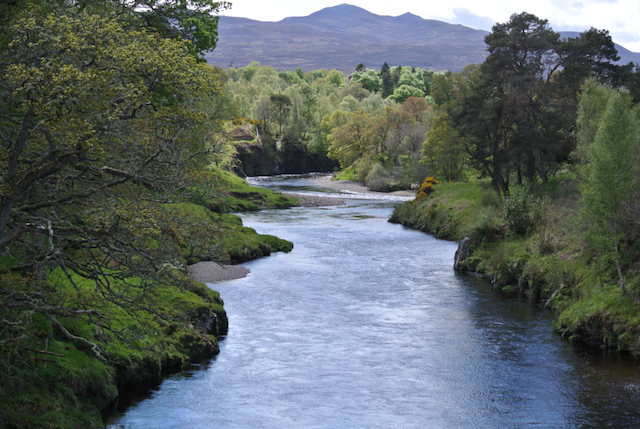
The birthplace of the Ross siblings about whom this story is written had been a beautiful secluded valley in the Eastern Highlands – the Strathcarron. After they came to Australia they settled in an even more remote – and arguably more beautiful – valley on the east coast of Australia, the Bellinger River valley. Life, of course, was not as idyllic as it sounds; times were tough, and life was precarious and often short. Three Ross siblings ended up in the Bellinger Valley, a fourth (my ancestor James) stayed in Sydney. This is the story of the Bellingen Rosses, and especially of the first that came to that valley – Andrew Ross.
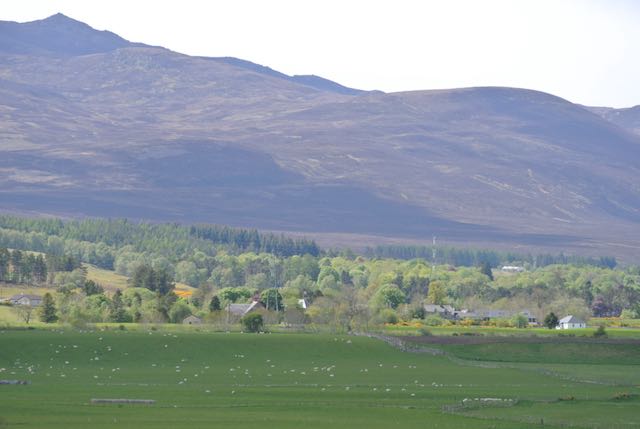
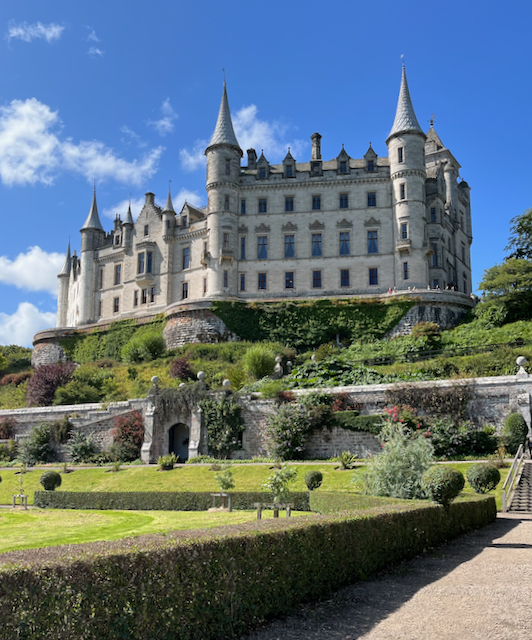
Andrew was born in 1834 in Gledfield, in the county of Ross and Cromarty, north of Inverness. He was the seventh of 13 children born to James and Catherine Ross. His father, originally from Edderton, a village which lies a few miles further east towards the coast, was a blacksmith. His mother, Catherine Urquhart, came from Golspie, a coastal town further north in Scotland, a town dominated by Dunrobin Castle, the family seat of the Duke and Duchess of Sutherland. These aristocrats, who lived most of their time in England, wreaked much suffering on the ordinary folk of the remote Scottish glens, responsible as they were for evicting hundreds of families to make way for sheep.
Andrew grew up during the awful years of the Highland Clearances. Though the Strathcarron was not in Sutherland, but in the next county south – Ross-Shire – it too was being progressively emptied of people. When he was eleven years old and on the verge of adulthood the Glencalvie Estate in the upper reaches of the Strathcarron was cleared of the crofters who had lived there for generations. Although these subsistence farmers paid rent for their small holdings, the lairds who owned the land had become convinced they could make more money from sheep than from the rent of crofters. In the name of economic progress they simply cleared the people away, burning their dwellings so they would not return.
The sorry tale of the Glencalvie Clearance was publicised across the whole of Britain by an article in The Times of London. Some ninety individuals peaceably left their homes after a few years of failed pleading with the landlord’s factor to let them remain. In the May of 1845, having gathered their possessions, they moved out and took temporary shelter in the churchyard at Croick, the first stop on their respective journeys out of their beloved valley to lands beyond, in some cases to the ends of the earth. I visited the Croick Churchyard a few years ago, which stands lonely and desolate in the still depopulated valley. There are few sheep there now; today the area is mostly frequented by deer hunters and fishermen chasing the elusive trout. There is no trace of the community that once thrived there.
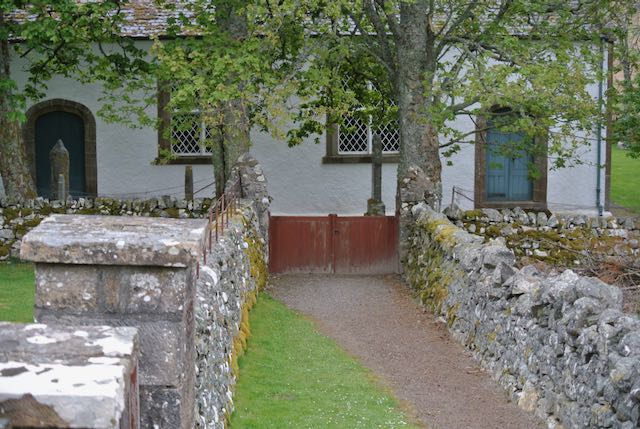
The event can hardly have failed to make a strong impression on the young Andrew, who witnessed the depressed and bedraggled families trudging through his little village, on their way to new lives, who could say where or how. He was sad for his countrymen, angry at the lairds who had no regard for these people. Though the Ross family were village dwellers and not themselves the victims of a forced eviction, he heard his parents and older siblings talking about the ramifications of this event for their lives too. He and several of his brothers would become blacksmiths like their father, but with a shrinking population the amount of work was also shrinking. There was no way their little community could support all of them.
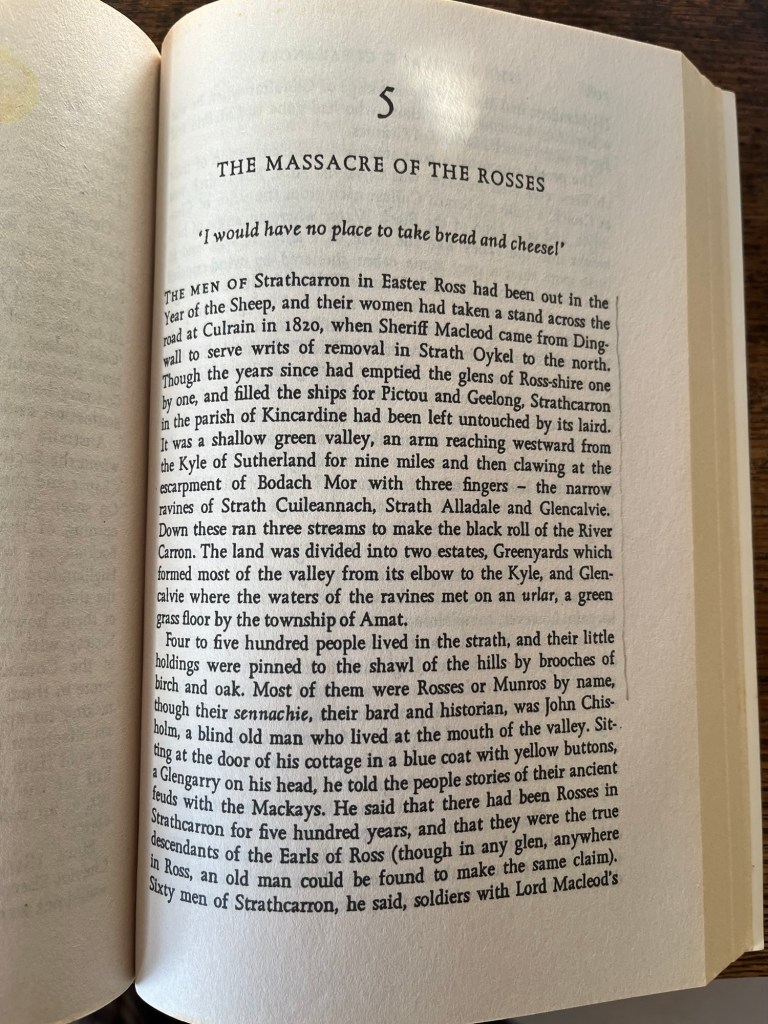
Ten years later Andrew, now an adult, was witness to another terrible eviction, this one even closer to home, the Greenyards Clearance. The historian John Prebble devotes a chapter of his book about the Clearances to this event, which he calls “The massacre of the Rosses,” reflecting the violence that accompanied it. Unlike the Glencalvie clearance, this was anything but a peaceful removal. Having seen what happened at Glencalvie the people of the lower Strathcarron were determined to resist the blatant injustice. Greenyards is very close to Gledfield, and the Ross family was shocked by what they heard about the confrontation in the days that followed. A recent novel by Sally Magnusson, Music in the Dark – a fictionalised account of this event and its aftermath – vividly portrays the suffering of the people, and the brutality of the police. Andrew Ross was by then 21 and though he was not, as far as I know, involved, he was as horrified as anyone in the valley by what happened there. The beautiful glen he had known and loved all his life was being engulfed in a darkness of which he wanted no part.
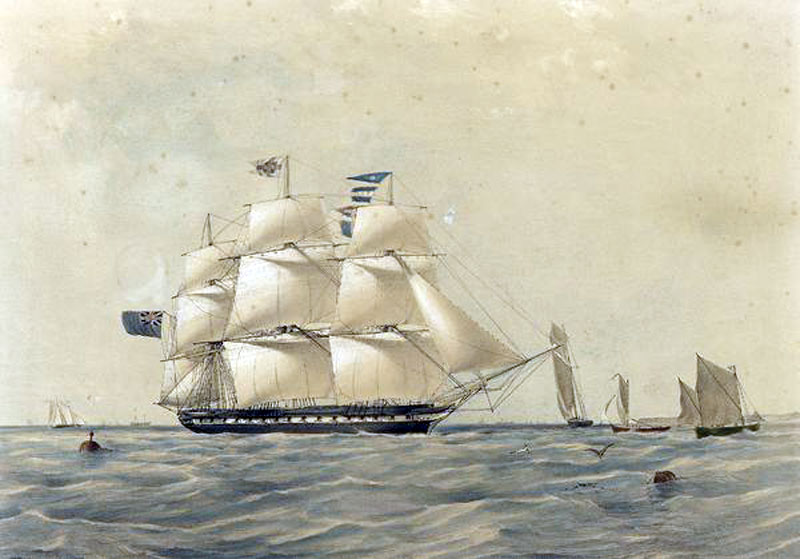
Andrew decided to leave Scotland. It may have been his sister Helen, three years older than him and still unmarried, who encouraged the idea in his head to take shape. Perhaps she had been wanting to leave for years, but was not keen to go alone. Besides, the subject of emigration was on everybody’s lips in those days. In 1857, the two of them – Helen and Andrew – left their Highland home and headed south for England, to Liverpool where their older brother James lived across the Mersey River in Birkenhead, and then by ship to Australia, a land which they saw as holding all the opportunities and promise that seemed to have disappeared from the Highlands.
Three months at sea in a sailing ship brought them very close, this brother and sister. Though as single emigrants Helen would have slept in the women’s quarters and Andrew in the men’s, the sailing ships of the time were not big, so their days were often spent together on the crowded decks. I can imagine the two of them leaning against the railings, staring out at the endless sea, dreaming and talking of the life and the land that lay ahead.
Their arrival in Sydney, however, brought the siblings’ closeness to an abrupt end. On the bustling dock prospective employers were assembled looking for workers. It was there, I believe, that 23 year old Andrew got snapped up by a Scottish settler who had arrived the year before, a man by the name of Anderson, who together with his family, had acquired land 400km north of Sydney, on a river called the Macleay, on which stood a fledgling village called Kempsey. Anderson needed workers, and it was an ideal opportunity for Andrew. Helen, on the other hand, was not needed out there in the bush, and appears to have stayed in Sydney, where I imagine she was employed as a housekeeper. And so the siblings were separated.
Andrew boarded another ship a few days later and travelled with William Anderson up the NSW coast past Newcastle and the old penal settlement of Port Macquarie coming eventually to the Macleay River, which opens into the sea near the present day village of South West Rocks, now a popular and picturesque holiday spot, but then quite non-existent. How long it was until he and Helen saw each other again I can only guess. But their lives would eventually converge again.
Andrew was 23 years old and embarking on the adventure of his life. The Macleay River was huge compared to the River Carron back home. Fertile river flats – flood plains – spread out on either side, offering prime farming land, perhaps not as picturesque as the landscape back home, but potentially much more productive, promising prosperity for anyone willing to work hard to bring it under control. The Anderson family had acquired a piece of land in an area called Austral Eden. Kempsey lay another 10km or so upstream, but beside Austral Eden another small settlement had appeared, a scattering of dwellings that people knew as Darkwater Village, named for the colour of the river that joined the Macleay just at that point – Darkwater Creek. The village and the river have long since changed their name – now they are Gladstone and the Belmore River. Gladstone is now a pretty little place on the banks of the mighty Macleay, a nice stop for lunch on the road between Kempsey and one of our favourite snorkelling spots – Hat Head National Park.
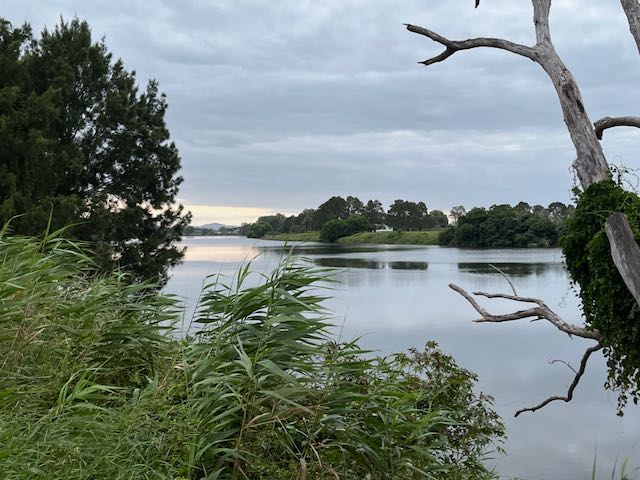
Andrew became part of the Anderson family, helping William and his sons to clear the land and break the soil. It was hard work but he was young and full of energy, toughened by his Highland childhood. He was fascinated by the wild new land around him, and was naturally curious about this place to which he had come. A certain uneasiness grew in him as he became aware that this valley had not been empty when the first timber getters and settlers had arrived. It was the ancestral home of the Dhungguti people, but, like the crofters of his native land, they had been cleared away by unsympathetic newcomers seeking their own fortunes. To his dismay he heard stories of violence, realising that some of his predecessors, British settlers, had shown themselves no better than the lairds of Scotland, quite willing to displace and dispossess people who had lived there for many generations but who stood in the way of their own economic future. Though Andrew came some years after the terrible conflicts that had played out between the first settlers and the Aboriginal people, he couldn’t escape the gnawing guilt he felt knowing that he was living and working on stolen land. When he saw cowed and beaten Aboriginal people in the streets of Kempsey, or wandering through the newly cleared fields of Austral Eden, he was reminded of the poor crofters dragging their feet down the valley in which he had grown up, forcibly banished from their Highlands homes.
In 1860, a few years after Andrew had moved to the Anderson property in Austral Eden, tragedy struck the Anderson family in Austral Eden. William’s wife, Ann, died, and was buried in Frederickton, a settlement on the outskirts of Kempsey. William was left with five children to raise on his own. His oldest son, David, was by then a young man of 18, who with Andrew, 26, was providing much of the hard labour required to establish the Anderson holding. David and Andrew had become close friends, and would remain closely connected through the years ahead. David’s sister, Janet, by then 16, took on many new responsibilities after her mother died, including the care of their three younger siblings, who were also rapidly approaching adulthood.
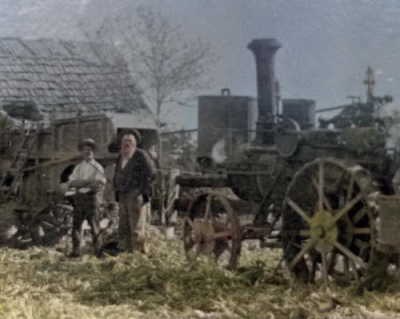
William was, of course, lonely, being a widower only recently turned forty. Inevitably he remarried, a young Scottish girl that he and Ann had got to know on the ship coming out from Scotland. Margaret McQueen was 18 years younger than William, just 25 when they married in 1862, closer to her new husband’s son David’s age than to his. Until their marriage she had been living in Sydney; frontier life was very different, but one to which she adapted quickly. William and Margaret would eventually have a whole swag more children, a second family for William, but before that more change was to happen in the Anderson family.
William and his son David had been wondering a lot about the future. Their land at Austral Eden was not extensive and would not support all of them. There was much talk around Kempsey and the Macleay at that time of more land opening up further north on the Bellinger River. There was no town there and no road to reach the remote valley, but reports were promising.
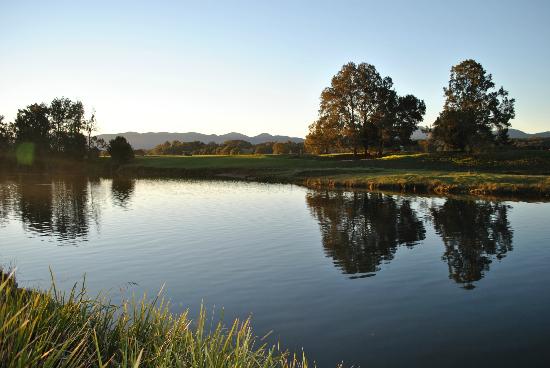
The Bellinger river and its surroundings was (and is) home to another Aboriginal tribe, the Gumbaynggirr people, who have lived there for thousands of years. “Discovered” by white men in the 1840s, the area boasted some of the finest stands of red cedar in the country, so it was naturally of prime interest to timber men, who were prepared to go to extraordinary lengths to extract this botanical “gold” from the heavily forested valleys, then drag it with bullocks to the river and float it down to the sea where it could be shipped to Sydney and beyond.
In 1841, the Government Surveyor of the Macleay District, Clement Hodgkinson, had visited the area with a Kempsey stockman who together with some timber men (sawyers) had come across the river the previous year. Hodgkinson’s journal reveals something of what the area was like at the time:
“… here I saw the finest cedar and rosewood trees I have yet noticed… we found ourselves on a beautiful grassy forest bank overlooking the river Billingen. Here we had an abundance of bark to build a secure shelter for the night… The grassy forest flats were principally wooded by that species of eucalyptus called forest mahogany.”
The following year he visited the area again, and wrote:
“I determined to ascertain whether the Billingen River was navigable and to examine the country around its mouth [since] I intended, if the land was adaptable to grazing, to form a cattle station there. The party went afoot. About that time the blacks from the sources of the Nambucca and the Billingen had committed several outrages on the sawyers. Being aware that one of the causes of the hostility of the wild blacks to parties travelling through the bush was their indignation at the encroachment of the white men on the haunts of the tribe, I resolved on taking with me some Yarrahappinni blacks with whom I had become acquainted during my surveys, as I knew that they would prove a great service in explaining to the Billingen blacks the object of my intrusion into their country…”
It is clear from this account that Hodgkinson was aware that as far as the “Billingen blacks” were concerned this land was their country (the “haunts of their tribe”) and they were indignant about the arrival of white men intent on taking the country for themselves. Hodgkinson strangely seemed to think that if only the ‘Billingen’ people understood his intentions to start a cattle station there they would be less hostile. So he took some other Aboriginal people with him to explain in language they understood the intention of his visit. His naivety in believing that this simple explanation would somehow make everything alright seems extraordinary, almost as extraordinary as the lairds of Scotland simply asking the crofters to leave their ancestral valleys and beloved hills to make way for sheep, thinking that they would welcome such “progress” and just quietly go away. Predictably, the refusal to just quietly move on and leave the land free was met with forcible, often violent, actions in the Bellinger valley just as at Greenyards.
The Andersons, and Andrew Ross, probably knew little if anything of all this when they became aware of new land available on the Bellinger. What they were aware of was the passing of the Robertson Land Acts in 1861, (the so called Selection Act), making it possible for settlers to acquire small parcels of Crown Land at low cost. To them it was “Crown Land” that was being offered – not “stolen land” as we now understand it to be. The Bellinger Valley was to most people’s minds simply new Crown Land that was being opened up. Since it was administered from Kempsey these new tracts were very much in the minds of local settlers along the Macleay. In 1864 both William Anderson and Andrew Ross acquired “selections” in the valley, as is mentioned in a book about the early history of the area, Pioneering in the Bellinger Valley (p.11). But it would be almost a year before either of them moved there, and when that time came it was not William Anderson who went but his son David.
That year, 1865, was again marked by tragedy in Austral Eden when William’s second son, also named William, died of complications of an accidental gunshot wound. Just 19, he was buried with his mother in the Frederickton cemetery. Tragedies like this were not uncommon on the frontiers at that time. But life went on, and the time had come for Andrew and David to make good their acquisitions on the Bellinger. Young William would have no doubt joined them if his life had not come to its sad end.
The story of David and Andrew’s journey to the Bellinger is told in Pioneering in the Bellinger Valley (p.164) in an article about another settler, a certain George Bailey, who also had a farm on the Macleay. Andrew is not specifically mentioned in the article, but it seems likely that he too came to the Bellinger Valley with this group of pioneer settlers.
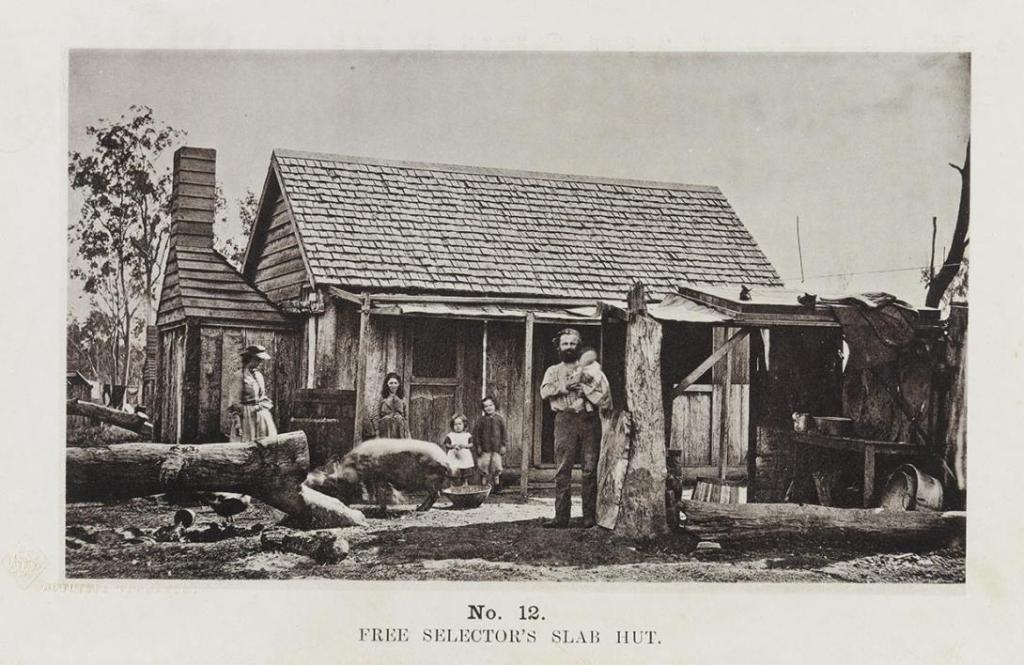
George Bailey first (after arriving from England) worked on a clearing lease for 6 months on the Paterson River (in the Hunter Valley near Maitland). The family lived in a tent. He next selected a small farm at Darkwater (now Belmore) on the Macleay River but after 3 years they found the place too small and decided to move to the Bellinger River, which was then being opened up. In 1865 they joined up with a party, some members of which were new settlers on the Bellinger. Included in this party were David Anderson and Henry Bennett and their families. Between them they owned several bullocks, a slide and a boat. There were no roads at the time so much of the journey was along the seashore. They loaded their tents and belongings on the boat, which was carried on the slide until they came to a river or creek. There they would put the boat into the water, load everything possible and row across. Other members of the party took the bullocks upstream until they found a suitable place to get them across. Then they yoked up and proceeded on their way… On arriving at the place they had selected… the first job undertaken was the falling and clearing of a space on which to build bark or slab huts for living quarters. Then came the falling and burning of the scrub, corn being planted between the logs with a hoe. The corn was used extensively as food such as hominy porridge and cornflakes, which were made by grinding and sifting the meal for flour or coarser meal. For milk and butter they kept goats for the first few years and of course they were able to grow vegetables and raise pigs for their own use. The only shop was at Fernmount, 3 or 4 miles downstream, and the only way to travel was by boat.
“Boat Harbour” was the point furthest inland on the Bellinger river that could be reached by boat from the sea, some 15km from the coast. The scattering of pioneer huts of the 1860s would evolve into a village which eventually became known as Bellingen, derived from the same Gumbaynggirr word which gave the river its name. Although the meaning of Bellingen is not entirely clear, it apparently describes the “cheeky” behaviour of the native quoll. However, when Andrew Ross and his friend David Anderson came to the area it was still known as Boat Harbour.
David (23) and Andrew (31) arrived in the Bellinger valley in 1865 as single men. Janet by then was 21 and may have spent some time with them in the early years, though this is by no means certain. The two men worked together to build slab huts in which to live. At the same time they were busy clearing land, planting crops, and acquiring livestock. In the evenings around the campfire they ate damper, drank tea and shared their dreams. Their life was hard, but they were young and strong and full of hopes and dreams for the future. There is a description of what life was like in these early years in Pioneering in the Bellinger Valley. It describes the experiences of another family (McNally) who came to the area at much the same time, and who would have been neighbors with Andrew Ross and David Anderson.
The country was all a thick dense scrub, and the only place you could see the sun was on the river bank. The new arrivals… with stout hearts and hard work carved out a home site in the bush. The only communication with the outside world was by sailing ships that traded to the rivers to collect the cedar logs. These ships brought the food required for the timber cutters and the few settlers along the river. Each settler had a rowing boat and when the ships arrived (this knowledge was conveyed to them by the Aborigines with their smoke signals) they rowed down to Bellinger Heads (now called Urunga) to collect their share of flour, tea, sugar and corned beef. There were no roads in those days and the river and a boat were the only means they had to get anything… If the food supply ran out, inhabitants took their boats to the Bellinger Heads and left them there while they walked along the beach to the Macleay, collected some supplies, and walked back again with their packs on their backs. [As soon as] some of the land [was] cleared and burnt off they started to grow some vegetables, maize and pumpkins. These made good progress and held out promises of good crops, so they decided to introduce pigs to supplement the home larder for an addition to the continuous salt beef diet…[the pigs had to be carried from the Macleay since they refused to walk in the right direction along the beach]. (Pioneering in the Bellinger Valley, pp.160-161)
New settlers were arriving all the time, mostly immigrants from Scotland, Ireland and England, but there were a scattering from other European nations too, notably Finland (Carl Doepel) and Germany (Johannes Marx and his family). Pioneering in the Bellinger Valley (pp.165-6) again:
The story of how Mr Marx’s group arrived from the Macleay to their new home at the farm, later to be owned by John Allen, is well worthy recalling. David Anderson, of Boat Harbour, volunteered to guide the Marx family to the Bellinger – no easy task in those times. He was probably in the Kempsey area to get rations, which at the time had to be humped all the way from Kempsey on the back of the consumer. The journey had to be done on foot and in single file with the river crossings being improvised on the spot. The difficulties of the German family, not possessing one word of English between them, and the Scotchman the same with German, may not be conceived.
Such were the experiences of those early settlers, who like David and Andrew had a vested interest in getting more people to the Bellinger Valley. The Marx’s had initially moved, like the Andersons, to the Macleay, so I can imagine that David, back home in Austral Eden for supplies, heard from his father that there was a German family who had arrived in the area but who wanted to go on to the Bellinger. Could he guide them there? To which David answered yes with enthusiasm. Johannes Marx was twice David’s age – his two sons were probably a similar age to David. I can imagine them sitting around the fire at night – the trip took several days – with David feeling very lost and lonely amidst the chatter of a foreign tongue.
Johannes Marx was wealthy by comparison with many of the other pioneers in the Bellinger Valley, but he was generous with his money, often offering loans which he knew people would not be able to repay. He is remembered kindly, not least because of the vineyard he planted and the wine it produced. He was a committed Christian and for years held church services twice a week in his home. He died tragically in an accident when he was 67 years old. His daughter Frieda trained to become a midwife and is well remembered in the valley for delivering many of the children born in those early years.
Things had of course been happening in the wider Ross family too. Four months before William had married Margaret in Sydney, Andrew’s sister Helen had married an English migrant, James Redstone, a journeyman painter (August 1862). Both couples had wed in Scots Church at Church Hill in Sydney (near the present day “Rocks”). It seems likely that Helen and James were guests at the Anderson wedding, given their connection through Andrew. Perhaps Andrew was there too, down from the Macleay with William. Over the next two years, and by the time Andrew moved to the Bellinger, Helen and James welcomed two little girls, Emily and Helen, into their family. The Redstones were always enthralled by Andrew’s infrequent letters describing life “on his selection.”
Then in 1866 another migrant ship, the Africana, arrived in Sydney carrying more Rosses to the colony. James, the older brother of Helen and Andrew, the one who had been living in Birkenhead (by Liverpool) when they had sailed from England in 1857, had decided to move his family – they had four children by that time – to Australia too. The youngest sister of the Ross clan, Jane, fresh from the Highlands, came too with James and his family. She was just 21.
James Ross was a carpenter, a ‘journeyman joiner’, and easily found employment in Sydney, where he and his wife settled permanently, going on to have four more children. Jane, however, was young and adventurous and keen to see her brother Andrew, whose pioneering life on the frontier filled her with inspiration. Less than a year after she arrived the Sydney Rosses heard the exciting news that Andrew was about to be married. He had finally managed to convince Janet, the extraordinary younger sister of his friend David, to be his wife. Perhaps he had been asking her for years, but she had not been ready; she was after all nearly ten years younger than him. In 1867 they married, back at the Anderson farm on the Macleay. Andrew was 33, Janet 23. I like to think that somehow Andrew’s youngest sister Jane found her way to Austral Eden for the wedding, and perhaps even Helen too. Helen was, after all, his “big sister,” and was delighted and relieved that Andrew had at last found a partner, no small thing for someone living so far away in the remoteness of the Australian bush.
This wedding was Jane’s introduction to the Anderson family, and David was delighted to meet her. He fell for her immediately but two more years passed before they too married, on the farm at Austral Eden, like Andrew and Janet. David took his willing young bride back to the Bellinger River, where his small property was beginning to be productive enough to support them.
Janet and Andrew’s first child, Ann, was born in 1868, and by 1870 Janet was pregnant for the second time. But then tragedy struck again. Somehow, from somewhere, Andrew contacted phthisis, or tuberculosis as we now know it. His body began to show the signs, with fevers and weight loss, and a persistent cough. It did not last long. In May of that year, 1870, he was struck down with a diarrhoeal illness – ‘English cholera’ it was called in the newspaper notice – and in his weakened state he had no resistance. He died tragically on 21 May and was buried at Fernmount cemetery, just downriver from Boat Harbour, which would soon start to be called Bellingen.
Death notice: On 21 May of English cholera, at his residence, Boat Harbour, Bellinger River, Andrew Ross, age 34 years, leaving an affectionate wife, and one child, and a large circle of relations and friends to mourn their loss; much respected by all who knew him. His end was peace. [The Sydney Mail. Saturday, June 18, 1870]
It was a terrible blow to the family. To add to the calamity Janet was far advanced in her pregnancy, and had a toddler in tow, but David and Jane – her brother and sister in law – were at the Macleay, where Jane had delivered her first baby just 3 days before Andrew died. Janet was a tough young woman (she was 26 at the time) but she must have felt very lonely as she stood pregnant at the graveside, little Ann at her side. I feel sure that David, as soon as he got the news, would have hurried as fast as he could back to Bellingen to be with his sister, and to accompany her cross country back to Austral Eden where she would be surrounded by her wider family.
It was a bittersweet reunion when Janet arrived at Austral Eden. Jane had delivered a healthy boy, a reason for rejoicing, but Janet had lost her husband and Jane her brother. Jane had not been able to attend Andrew’s funeral. Nor had David been able to be at his friend’s bedside during his final illness, though he may have made it to the funeral. A few weeks after they arrived at Austral Eden Janet birthed young Andrew, a reason for rejoicing in the midst of their sadness. When the party set off to return to Boat Harbour a few weeks later it was without husband (for Janet), brother (for Jane) and friend (for David). It was a strange mix of grief and happiness.
About this time, it would seem, Helen and James decided to move with their now three children to Bellingen. I have wondered if this move was triggered by a desire to take care of the two young mothers – Helen’s little sister Jane, as well as Janet; Helen was 14 years older than the two of them. After all, they had only David to help them out and he was hard at work in the bush every day. Helen’s husband would be a welcome addition to the workforce in Bellingen. Boat Harbour became home to three Ross women, and now a growing bunch of children.
I will tell more of Jane’s and Helen’s stories in another article, but I want to conclude this story with a quote from the Coffs Harbour Advocate, an obituary for Andrew’s young wife Janet, a Ross by marriage, who eventually remarried (to become Janet Ide) and moved even further north to an area known as Upper Orara, west of present day Coffs Harbour. She lived to 79 and passed away in 1923. The article says something of the toughness and resilience of a young women who braved the wilds of the Mid North Coast in the early days of European settlement.
Coffs Harbour Advocate (NSW : 1907 – 1942; 1946 – 1954), Wednesday 17 October 1923, page 2
OBITUARY.
Death of Mrs. Ide, Senr.
A Pioneer Passes.
The Grim Reaper has garnered another pioneer, Mrs Janet Ide, one of the district’s oldest and most highly respected residents. The deceased lady, who had reached the advanced age of 79 years, had been ailing for the past three weeks and she suffered considerably, though her stout heart kept her up, and her courage and cheery good-nature never flagged. When the end came in the early hours of Sunday morning, every settler in the Orara Valley knew a friend had gone.
This grand old lady was amongst the first to brave the perils of the North Coast scrub, and many times she rode from the Bellinger to the Macleay, taking two infants with her, to bring back a bag of flour for rations. In those days, lonely travellers were always liable to be attacked by the blacks ; but the late Mrs. Ide had no fear of the tribesmen, having always treated them with the kindness so characteristic of her nature. Nevertheless, she had some nerve-racking experiences, and, on one occasion, looked up at her window to see an aboriginal outside in full war-paint. He melted into the shadows, having no quarrel with one he knew would do him and his no harm. And that was in the years when settlers were being massacred.
The late Mrs. Ide was twice married, her immediate descendants being Mr. Andrew Ross (Ulmarra) and Mrs. R. Newton (Bellingen); later members of the family, all of whom reside at Upper Orara, are Mesdames R. Hunter, S. A. H. Gill, G. Stanlan and H. McDowell, and Messrs. Alfred, Robert and Victor Ide. To all we extend our sincere sympathy. The funeral, which took place at the Anglican cemetery, Coffs Harbor, on Monday, was largely attended, and the Vicar, Rev Sutton Oldham, read the last service. Mr. C. Everingham carried out the burial arrangements in his usual capable manner.
One of the best and bravest gone;
Treading the beaten track
That all must walk when their days are done:
Their history written back.
A paperman for folk to scan,
May scribble a word of praise;
But save a thought for the lives who
fought through our father’s pioneer days.
Notes and some books
- Much of this story has been imagined. None of the Ross siblings kept diaries as far as I know. They had enough on their hands just surviving. The dates and places of births, marriages and deaths are recorded in various archives. There are also immigration records still in existence. The book Pioneering in the Bellinger Valley (2012 edition, is produced by the Bellinger Valley Historical Society) has been very informative
- The actual location of the Anderson farm on the Macleay I have not been able to discover. Some old documents record their address as “Macleay River,” others as “Belmore River,” others as “Austral Eden.” The area is wide and flat and fertile, repeatedly flooded down through the years )most recently a few weeks ago, in May 2025)
- Nor do I know the exact location of Andrew Ross’s selection on the Bellinger River.
- The Highland Clearances, by John Prebble, (1963 Penguin) is the classic history of the Clearances.
- Music in the Dark, by Sally Magnusson, (2023 John Murray Publishers), is a recent novel exploring the effects of the Greenyards Clearance. Another novel about the Clearances is The Wicked Generation, by Alison Johnson (1992 The Blackstaff Press), the title of which was inspired by engravings which can be still seen on the windows of the Croick Church, in the upper Strathcarron. These engravings read, “Glencalvie People was in the church here May 24 1845… Glencalvie people the wicked generation.”


Hi,
I have just come across this site. To answer your question about the naming of Rossglen. It is named after my great great grandfather, Frederick Dalrymple Ross. He was the Postmaster of the town.
Philip Ross
Hi Philip, fascinating! Thanks for that bit of info. There seems to be a lot of Rosses around the mid north coast. Do you know your great great grandfather’s history? Where was he from? And what was his connection with the Camden Haven River? Was he a timber man? I have ancestral links with the Wallamba River and Forster as well as the Bellinger. Would love to hear more of your gg grandfathers story if you know it.
I have quite a bit of history on Frederick D Ross.
Born in 1824 in Edinburgh (Midlothian) he came to Australia when 15. Lived in Lower George Street The Rocks in Sydney. He had a shop in the same street and was described as a clothier. In 1866 he moved to Cundletown, near Taree, and ran the bakery shop. Around 1870 he and his wife Mary moved to RossGlen where he became the Postmaster.
To answer your question about the timber industry this is reported in a history of RossGlen: ‘Frederick was undoubtedly in the timber industry and is thought to have owned a small saw mill.’
Mary died in 1901 and is buried in Moorland Cemetery. It seems Frederick returned to Sydney at some stage. He died at Chatswood in 1922, aged 98, and his death certificate reports he was buried in Moorland Cemetery.
I have been able to locate Mary’s grave in Moorland Cemetery but Mid Coast Council have advised me there is no record of Frederick Dalrymple Ross being buried in Moorland Cemetery. Any advice on how I could track down where he is buried would be appreciated.
Hi again, Trove says he was buried in the Catholic cemetery in Ross town. I suspect that this refers to Rossglen. Is there a cemetery at Rossglen? See https://trove.nla.gov.au/newspaper/article/245789753?searchTerm=Frederick%20dalrymple%20ross#
Regards, David
I have seen that information in Trove. There is no cemetery in Rossglen. His death certificate says he is buried Moorland Cemetery. I am going to try and contact the funeral company who arranged the funeral to see if they have records back to 1920s.
Have you been to the Moorland cemetery? Perhaps he is there beside Mary. Could it be that they did not mark the headstone?
That is a good point. I had a friend visit the grave site and he did not notice anything. I am visiting in the next month so I will have a good look around the site. Someone has placed plastic flowers on Mary’s grave site so there must be some relatives, I assume on the mid north coast, who I don’t know.
If I finish work in time tomorrow (before dark) I will pop in on the way home.
Thanks David. Mary Ross is in Lot 201 in the Roman Catholic Section which is on the right hand side at the back of the cemetery when looking from the highway. Council advised me there is no one buried next to her but there are some unknown graves in the area near her. I might also call in this weekend if I get a chance as I will be visiting the area.
Well I popped into the cemetery this evening and found Mary’s headstone. It’s in a lonely spot a little away from the crowd of other graves and you’re right, there is nothing around it and behind it is just an expanse of grass and then the bush. The caption on the stone attests to it bong the right Mary… “in memory of Mary wife of F. D. Ross. Died 13th September 1901 aged 84 years. Sweet Jesus have mercy. R. I. P.” I couldn’t find a sign to say it was the Catholic Section, but I’m sure there is a map somewhere. It’s a mystery where Frederick lies. Coopernook cemetery is not far away. But I wonder if he might have been laid to rest somewhere in the village that bears his name even if there is no cemetery there. I have a photo of Mary’s grave if you don’t have one. Let me know your email address and I can send it.
Many thanks David for taking the time to visit Mary’s grave and for the information you have provided. I have photos of the grave that my friend provided me. I have a map of the cemetery that I got off the mid coast council web site and where she is located is in the Roman Catholic section.
I am planning to visit the area this weekend or within the next month. I haven’t been to Rossglen but I have seen drone footage of the area on YouTube so I look forward to seeing the area.
I tried to contact the funeral company mentioned on the death certificate to see if they have the plot number where Frederick was buried at Moorland. Another road block, as they merged with a company in Sutherland in Sydney. I am going to contact them but I am not hopeful they would have the records going back 120 years.
I am only new to tracing my heritage and despite the road blocks it is an interesting experience.
Thanks once again for your help. I will update you if I find any further information.
Hi David,
I am not sure if you got my last reply thanking you for visiting Mary’s grave. I went to Moorland cemetery and Rossglen for the first time on the weekend. A couple of points that may be of interest:
Great that you managed to get up to the mid north coast over the weekend. I was in Sydney with my wife where we celebrated the engagement of my youngest son (who we gave the name Isak Erik Ross!) to his fiancée India. It’s interesting to follow family threads. One of my ancestors lived in a house in Sydney down near St Philip’s Church Hill. When I went to check it out I had a similar experience to you . It is now lost underneath a high rise office block near the southern approaches to the harbour bridge. Great that you could meet some people in Rossglen. I have never seen a soul when I have driven through. It would be great if you found the grave of Frederick. Good luck with the Kendall contacts. I am back in port Macquarie this week.