In July 1874 Kate Hickson was 29 years old, an unmarried Irish emigre who had arrived in Sydney, New South Wales with her younger brother George almost 11 years previously. Teenagers when they arrived in late 1863, respectively 19 and 18 years old they had descended the gangway of the sailing ship Severn after three months at sea, and surveyed their surroundings – The Rocks of Sydney – which would become their home over the decade that followed. For the first seven years in Australia, sister and brother were very close, but when George married in 1870 their lives diverged somewhat. Kate, a year older than George, was still single and was “in service.” George, though trained as a nail maker in his native Ireland, had found work as a mercantile clerk in the city.
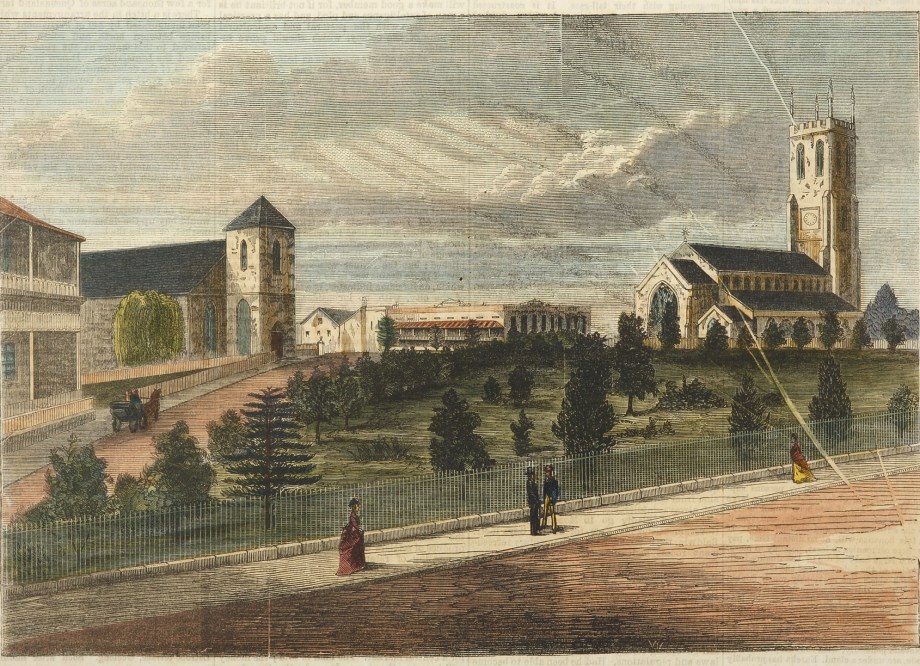
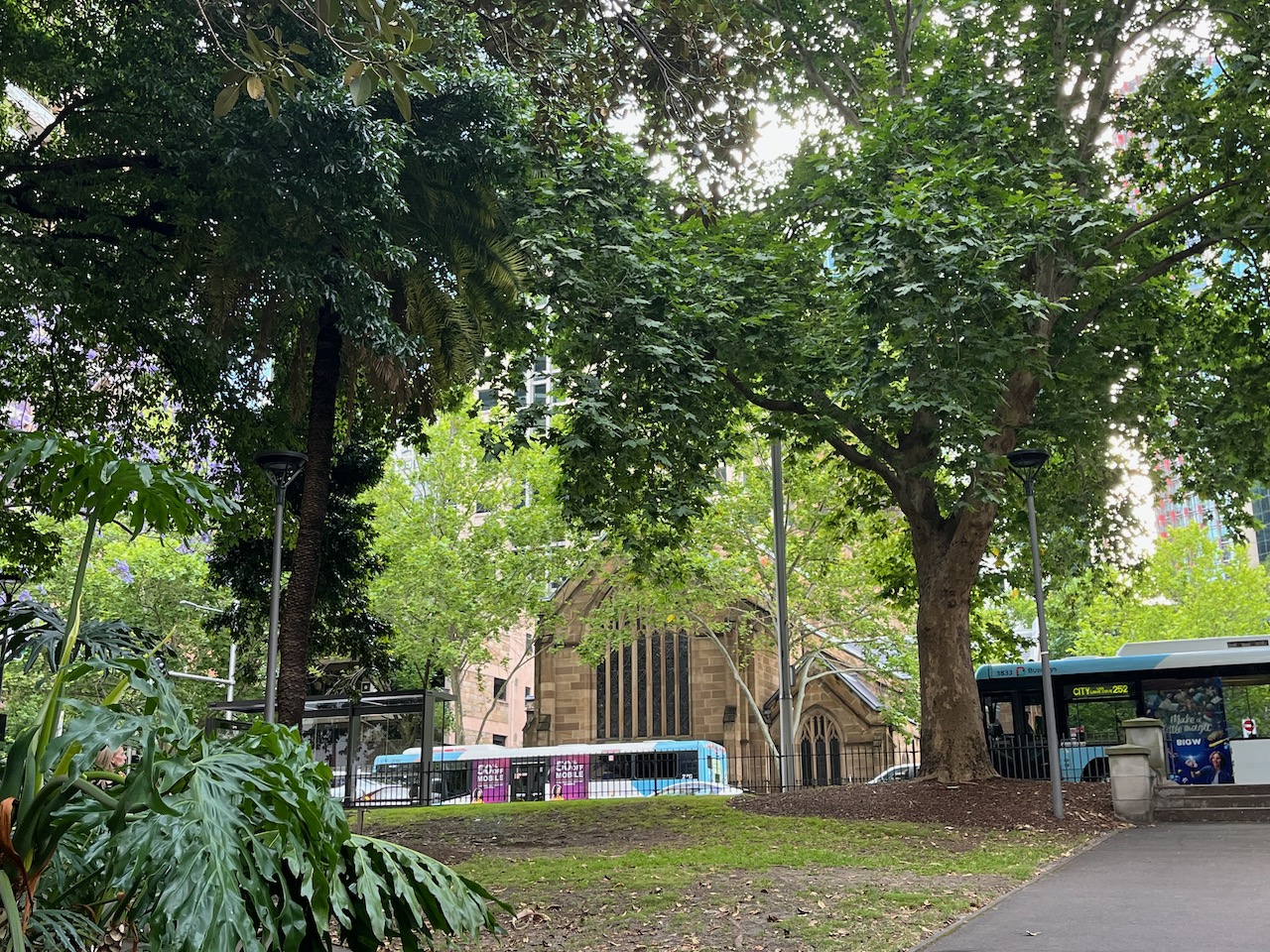
George had married Agnes Harper, making their home in Church Hill, an area of Sydney between Circular Quay and Darling Harbour named for the three churches in the area – a Catholic (St Patrick’s), an Anglican (St Phillips) and a Presbyterian (Scots Church), on different sides of the triangular Lang Park, today a sloping oasis of grass and trees amidst the skyscrapers of present day Sydney. George and his sister Kate, despite their early life in one of the most Catholic of Irish counties – Kerry – were Protestants, as their Hickson forebears had been for centuries, so they attended St Phillips, and it was there that George and Agnes married, on 9 November 1870.
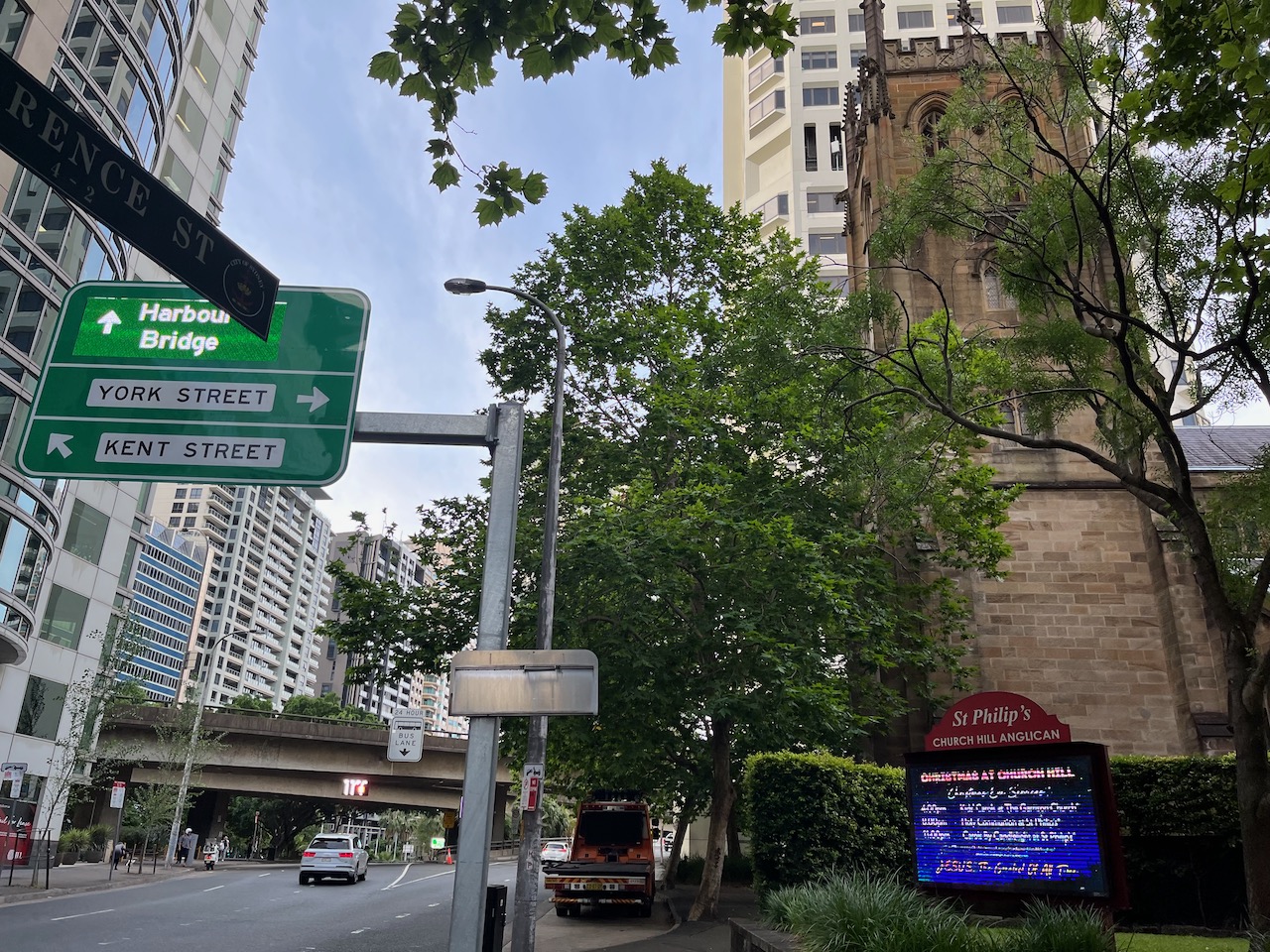
The house in which George and Agnes lived stood just a few hundred metres from St Phillips in Crescent Street, a laneway between Clarence and Kent Streets. Crescent Street and the Hickson home have long since disappeared, replaced by a concrete jungle, shadowed by the flyover approaches to Sydney Harbour Bridge, the construction of which would not commence till more than fifty years later. The Anglican and Catholic churches remain today much as they did when George and Agnes married, but a new Scots Church replaced the first one in 1929. Church Hill today is a stark contrast to the pleasant grassy rise in the emerging city of the 1870s.

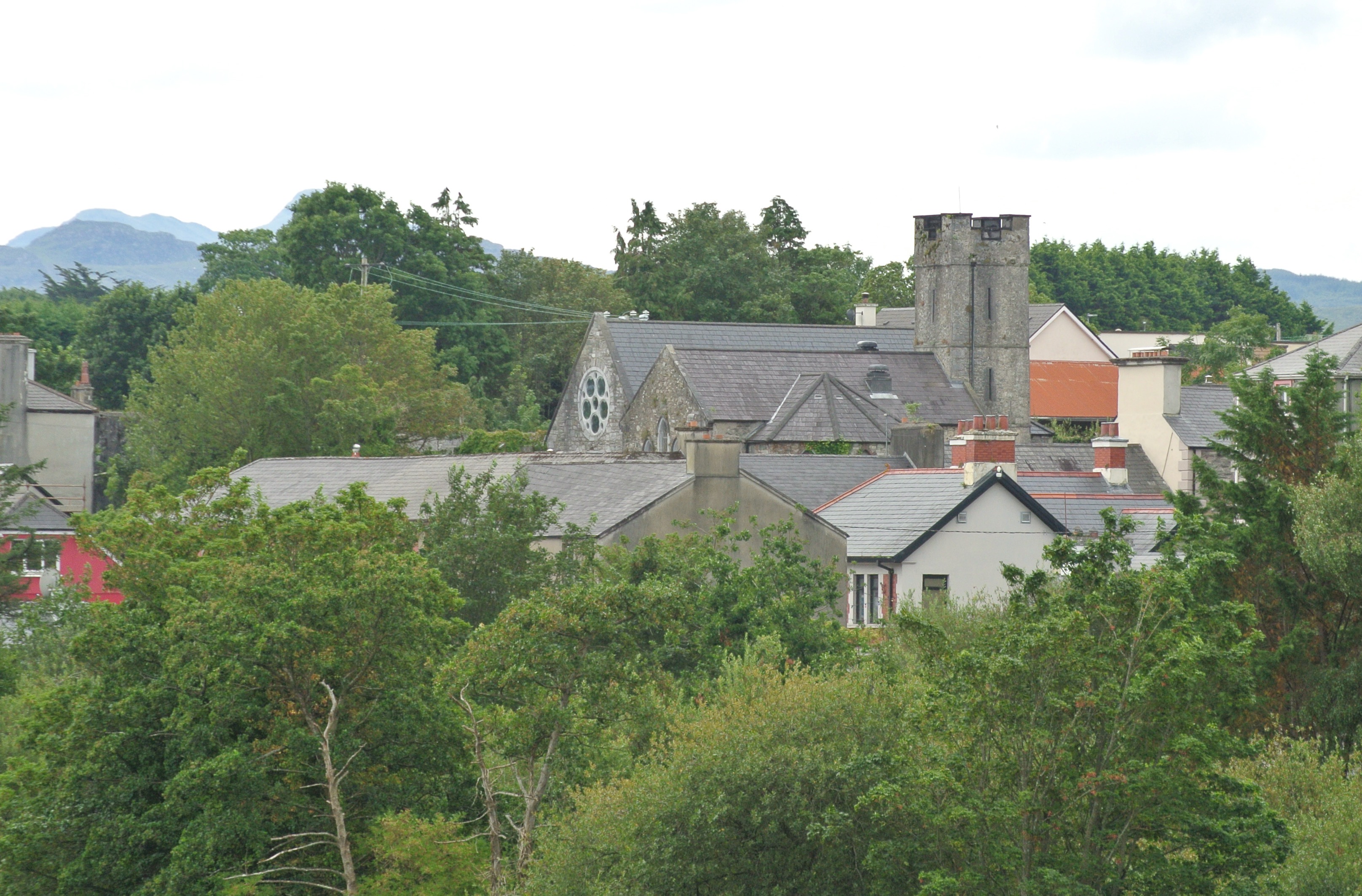
By the 1870s all of the Hickson family of Killorglin had left Ireland. Six had migrated to Australia; one, the oldest brother William, had gone with his wife, their three children and his ageing father, to Massachusetts in the USA. William was the only one of the Hickson family who had married in Ireland – his four sisters and two brothers all married in Australia. The three oldest sisters all migrated in the 1850s, before William married. The three younger siblings – Kate, George and John – and William, the oldest brother, and their father Richard – all left Ireland in the 1860s.
William married Mary Needham of Templenoe in 1858. After their marriage they lived with William’s widower father, Richard Hickson, in Killorglin where the Hickson family had grown up. The three youngest children of the family – Kate, George and John – were still in school. Their mother had died in 1853 when these three were respectively 9, 8 and 5, so the young marrieds, Mary and William, became like foster parents to them. Inevitably, children came along for William and Mary, so when Kate and George migrated together in 1863, the remaining Hickson home in Killorglin consisted of William and Mary, their three little children, John aged 15 and the patriarch, Richard, in his early 60s.
Two years after Kate and George left Ireland, William and Mary also migrated, and Richard with them, but instead of following the rest of the Hickson siblings to Australia, they followed Mary’s family to North America, where they settled in Massachusetts. Only John, by then 17, remained in Ireland after 1865, the last of the Killorglin Hicksons in Ireland. He too would leave, but not until he was 21 in 1869, and when he went, rather than joining William and his family in Massachusetts he decided for Sydney, where he arrived in 1870 just before George and Agnes married.
Over the next few years George and Agnes had two children, one born in December 1872 and one in December 1873 but sadly both died in infancy. Then tragedy struck the Hickson family when just six months after the death of their second child, George suddenly died too, leaving Agnes a widow just three and half years into their marriage. He was 28 years old, Agnes left a widow at 23.
I have tried to imagine a letter that Kate might have written to William and his wife Mary, in America, after George’s untimely death. It was over ten years since she had seen her older brother, but there is little doubt that they kept in close touch by letter. She was racked by grief.
George, according to the records, died in Marrickville, Sydney, on 4 July 1874. Why he was in Marrickville at the time of his death is uncertain, and I can only wonder. Whether his body was transported back to St Phillips for a funeral or not I don’t know, but he was buried at Haslem’s Creek Cemetery, some 17 km to the west of Sydney’s city centre (and about 10km from Marrickville). This “necropolis” is now known as Rookwood, and is one of Sydney’s oldest burial places, and the world’s largest remaining operating cemetery from the Victorian era.
I can imagine Kate and Agnes returning to the house in Church Hill after the burial. Both wanted to be alone with their grief. What did they do on that cold winter day, I wonder? Perhaps Agnes got busy in the kitchen preparing food, but Kate may have sat down to begin a long letter to inform her brother William and his wife the sad news.
Crescent Street
Church Hill
Sydney

5th July 1874
Dearest William
It pains me to think that by the time my letter reaches you this news will be months old. I have to tell you the sad news that our dear brother George passed away yesterday and was laid to rest today in the new Haslem’s Creek Cemetery out to the west of the city. My grief is boundless. Dear Agnes, his lovely wife, is inconsolable. So recently bereaved by the loss of their first and then second born, she is now a widow, and only 23 years old! How can a young woman bear so much tragedy?
It is times like this I long for family. Since Mother and Father died, you and Mary are the closest I have to parents. John is here, of course, and he has been a great support to both me and Agnes, but he has his Martha, and their two little ones, Alice and Edith. Susan, Mary and Ellen have their own families and I see little of them. I feel very alone, an ageing spinster (I will be soon 29), and Agnes is a young widow, though she has her parents to comfort her.
Oh dear, I am feeling sorry for myself. I miss our happy home back in Ireland, growing up in Killorglin by the Laune, during those happy years when you and Mary were newly wed and life came back into our home after the darkness of Mother’s passing. I miss those days of childhood, when everything seemed so hopeful and a life of adventure awaited. Then the babies – Richard, and Susie and Lizzie – we rejoiced with each one’s birth, and our days were filled with love and laughter. It was a wrench for us when we sailed for Sydney, George and I, but we really thought you would come too sometime. I never guessed you and Mary and Father would take the children, and go to America. But I understand you had your reasons, and it is a good life you have made for yourselves there, I can believe that.
George. What happened? It all seems so unreal. Can he really be gone, so quickly? He and Agnes were visiting friends in Marrickville, a township to the south of the city, down near Botany Bay, when he fell ill. Some fever of the brain seemed to seize him. Headaches and fever, then delirium until he lapsed into a restless coma.
He deteriorated quickly, over a few days, remaining in the home of their friends in Marrickville. He was too sick to travel home to Church Hill, many hours journey over dirt roads. The weather has been inclement and the roads are muddy. I was able to go to them, my employer urged me to go. He knows how close I am to George. Agnes called a doctor but alas he seemed powerless to help George. There was little we could do for him more than pray for divine intervention, though it was clear that he was deteriorating with each passing hour. Within days he was unconscious, but I believe he knew I was there. I sat at his bedside with Agnes and talked of Ireland. We prayed and pleaded, but to no avail. He finally slipped peacefully away in the early hours of yesterday morning , in the winter darkness.
I have lived with George and Agnes these last few years, since Agnes was expecting their first baby. I moved in to help her; pregnancy was hard on her, and the birth was difficult. You know of course the sad fate of the baby – Richard, named for our dear departed father – who died a day after he entered this world. After his birth I remained with George and Agnes, and found a position in service with a doctor whose rooms and home were close by, in The Rocks – an area of Sydney close to the harbour docks. When Agnes was found to be with child again we all rejoiced, but the joy of Lily’s birth was also soon engulfed by grief when she too died, just 3 weeks old. That was barely 6 months ago and now, still mourning Richard and Lily, we are bereaved again, Agnes and me, back in our lonely lodgings.
George has, as you know, always been the nearest and dearest of my siblings, since as children we played in the alleys and lanes of Killorglin town together, back in Kerry – “the kingdom,” as some call it. The three month sail to Australia deepened the friendship of our youth, as only a sea voyage can do. Ten years we have lived in this far flung colony of the British Empire, ten years since we walked down the gangway of the old sailing ship Severn onto the bustling docks of Sydney town. Susan, Mary and Ellen all came to meet us, but we see less of them as the years pass by – they all have families of their own, and Ellen moved to Melbourne after she got married, as you know.
John has been a blessing to us, since he too arrived from Ireland, just in time for George and Agnes’ wedding. He was there at George’s passing too, and took care of all the formalities with the funeral and burial. Susan and Mary were at the graveside today with us, but of course Ellen is in Victoria. But I I have never felt the closeness to our older sisters that I have felt with you and George and John.
What will we do now, Agnes and me? We are at a loss, but now, even as I write an idea is forming in my mind that I must “go home,” go back to where this adventure of life all started, to Killorglin, by the Laune, under the shadow of the Reeks. You may think I have lost my mind to be going back. How often we agreed all those years ago that once we left we should never look back, and here I am, speaking of returning. What can I hope to find back there? I don’t know, but I need to see Ireland again, I need to see the green hills of Kerry, I need to see the grey seas rolling in from the Atlantic and crashing on that wild western shore. Perhaps then clarity will come. Perhaps I will return to New South Wales, perhaps I should come to you and Mary in America, perhaps there is another place that God has for me.
Mary’s young brother Benjamin (he can’t be more than 21?) has talked of coming over. George told me he had written: George paid a deposit to sponsor his immigration. You will pass the sad news on to Benjamin of course. I suppose he will abandon thoughts of New South Wales now. God will surely guide his steps wherever he is.
Agnes showed me a poem that John wrote for George on their wedding day not yet four years ago. She found it on a loose sheet in George’s Bible, the Bible John gave him on that day. Let me share that poem with you:
Accept this trifling wedding gift
From one whose heart with yours is knit
Which, worth but little, still may prove
The token of a brother‘s love

Let not its unadorned cover tend
It’s sacred page to overlook—
Seek Spirit’s aid to comprehend
The secrets of this sacred book

Read oft and may the Holy Ghost
Renew your heart from day to day
And learn that earth’s vain hopes at most
Like short lived pleasures, die away

And as thy days on earth roll by
In weal or woe, when well or ill
Remember that the Lord on high
Has given thee work thou must fulfil.

Cleave to the promises: the blessings seek.
Thine heart from evil, strive to keep.
With wife and children hand in hand
Set out and reach the better land.

May blessings follow you through life
Around your path be ever strewed
Increase of love, intensified
By reciprocal feelings good

And when in years to come you may
Rehearse your tale of earthly strife,
To wife and children you may say,
“Mine has not been a misspent life”
The tears come to my eyes as I read it. “Earth’s vain hopes… like short lived pleasures, die away… With wife and children hand in hand set out and reach the better land… your tale of earthly strife…” Poor George has joined his children now – I like to think of them together in “that better land.” But it is too soon, too soon. What was the work that “the Lord on high” gave him to fulfil? He was just setting out, and now he is gone.
I miss George. He was my friend as well as my brother.
All my love
Your little sister,
Kate
Notes
- George Charles Hickson born Killorglin 1846 died Sydney 1874
- Migrated 1863 – age 18 – with sister Kate on Severn. Older sisters Susan, Mary and Ellen had migrated earlier
- Married 20 year old Agnes Harper on 19 November 1870 at St Phillips Church of England, Church Hill. Agnes was born in Australia to Alexander Harper and Sarah Bryant. Her father was a shipbuilder.
- They lived in Crescent Street, Church Hill, near St Phillips Church.
- First child Richard born December 25, 1872, died the next day.
- Second child Lily Beatrice born 28 December 1873 baptised 17 January at Philips died 19 January 1874 age 3 weeks. Residence Crescent Street.
- Of interest, a cousin of Lily, namely Lilly Gertrude Riley, daughter of George and Kate’s older sister Mary, died age 2 months 4 December 1873, three weeks before Lily Hickson was born.
- George died 4 July 1874 Marrickville age 28. Death certificate cited “cerebral effusion, serous, 3 weeks” as cause of death. Occupation listed as Clerk. 2 Children – dead. Wife Agnes. Born Ireland. In colony 12 years. Witness John. Buried 5 July.
- 8 October 1874 Benjamin Needham age 21 returned the 5 pounds that George had deposited for his migration to Australia. Ben, who was born in Co Kerry (presumably Templenoe like his older sister) migrated to America at age 6 in 1859. He presumably went with an older sibling, since his widowed father died in Ireland in 1862 shortly after having remarried. Ben was twenty years younger than his sister Mary, and seven years younger than George. He would have known George mainly through the family connections. The connections between the two families – Hicksons and Needhams – were strong, despite the miles that separated them. Ben never went to Australia. He lived and married, raised a family and died in Pennsylvania. He became a church pastor.
- Agnes Hickson remarried in October 1875, to a man named James Partridge, and had two sons, James and Edgar, both of whom grew to adulthood. However, she died in 1882 aged 31, when her boys were 5 and 3 years old respectively. There was much sadness in her life.
- Kate returned to Kerry shortly after George died. She sailed back to Australia at the end of the year, arriving on a ship named the Ninevah in January 1875. On the voyage she met Hugh Breckenridge, a Scot, who she married in August later that year. She lived the rest of her life in Australia.
- William and Mary Hickson, and their children, left Massachusetts in 1877, returning to Kerry for a few months before migrating for a second time, this time to Sydney, where they lived out their remaining years. None of Mary’s Needham relatives ever came to Australia, but William was reunited with Kate and John as well as the rest of the Hickson family.
- William and Mary Hickson’s first daughter, Susan (born in Ireland in 1861), was my mother’s grandmother. John Hickson’s first daughter, Alice (born in Australia in 1872), was my father’s grandmother. My parents, who were thus third cousins, were not aware of this connection when they married.
 Forgotten tales
very interesting.
Quite a bit of sadness in the Hickson family, but I did, as always, enjoy reading this.
I guess that life was in some ways tougher in the 1800s than now! But there’s no shortage of sadness in our world, as you know better than most!
Notes on A Death in the Family
Hi David.
I’ve made a series of comments below, some more nerdy than others.
I have a close personal interest in Church Hill as my first home was the old St. Philip’s rectory from 1952-4. My financial advisers moved from Chatswood to No. 1 York street a few years ago, which is on the footprint of the old rectory and church hall. A former missionary and Anglican, my personal adviser at the time was quite impressed.
The second L in honour of the first governor was abandoned at the building of the second church at Church Hill. So Wikipedia.
The site of the first St. Philip’s was what is now Lang Park. There is a plaque to that effect that I noticed only for first time last time I was there, in November last year.
The Presbyterian Church is also often referred to as the Scots Kirk.
The three churches are not on the same block. Each is on a separate block, the St. Philip’s block bounded by York, Jamison and Clarence Sts.; St. Patrick’s block by Gloucester, Grosvenor, Harrington and Essex; and the Scots Church block by York, Margaret, George and Jamison. So Clarence Street runs behind St. Philip’s in the 1870 engraving, and behind the buildings in the middle of the picture. York Street runs in front of St.Philip’s, but behind the Scots Church.
Very interesting to know about George and Agnes Hickson’s domicile so close to St. Philip’s and the now disappeared Crescent Street. I note the new crescent around the front of No. 1 York for traffic going north in Clarence bailing out from crossing the bridge to come back south on York. A nice touch whether deliberate or not.
The road bridge over Clarence Street isn’t really an approach, but actually an exit as the traffic only flows south along it.
Today Church Hill doesn’t feel like a hill because the ramp to the bridge starts to rise from the level of the top of the hill.
If George was buried from St. Philip’s his body would have been taken to Rookwood from the Mortuary railway station in Regent Street next to Central. Its was opened in 1869 while the line already ran to Rookwood from as early as 1865. (Transport Heritage NSW article.)
George and Agnes’s story is passing sad. I wonder if their health was compromised by the prevalence of disease in The Rocks? Bubonic Plague broke out there in 1900:
https://www.sydney.edu.au/medicine/museum/mwmuseum/index.php/Bubonic_Plague_comes_to_Sydney_in_1900
I wonder if you should add script-writer to your accomplishments?!
Blessings,
Peter (Robinson)
Hi there Peter, I should have thought of picking your brain about St Philips but it didn’t occur to me that you lived there, even though I knew your dad was the rector for a while. The thing about “the same block” was poetic licence: I did see that the three churches are on different blocks, but around the same park. I found a map from 1880 on the internet which shows clearly the position of the three churches at that time as well as the very small Crescent Street, now gone. I am puzzled by what could have caused George’s demise, and why he died in Marrickville. The plague is an interesting idea. I saw that there was a recent novel published called The Rat Catcher about rat borne diseases in Sydney around the turn of the century. I will try to read it sometime. George was buried at Rookwood the day after he died in Marrickville. So he may not have been taken back to St Philips since it would not have been in the way. But who knows?
Thanks for your comments and corrections. It would be good to see you again sometime. Hopefully we will get up to the mountains sometime this year. We will be sure to come by for a cuppa.
Thanks David,
I really appreciate the research you have done to investigate your family. I commented on a blog you did sometime ago on George Needham because I am also related to the Hickson’s of Co. Kerry. Our daughter visited recently and asked about our family history so today I went searching for your blog again.
Kind regards
Lyn Keating nee Sheehan my mother was Marjorie Sinclair daughter of Almira Hickson.
lynkeating@outlook.com.au
Hi Lyn, great to hear from you again. Glad that my various blogs have been of some interest, I wish I knew more, and I wish I had more time to write. I have been preoccupied for a few months with my Ross relatives, those that settled on the mid north coast of NSW. The one Ross sibling that stayed in Sydney was James, the father of William, who later married Alice Hickson’s, the oldest sister of Almira, if I remember correctly. Alice and William were my great grandparents, where some of my Irish, and all of my Scottish heritage comes from. There are still many stories to explore among them. If you (or your daughter) ever want to write a story about Almira send it to me and I will include it in my blog.