This is the fifth in a series of articles about my family’s involvement with the COI in Kerry in the nineteenth century.
I have previously written about the strong involvement of my Hickson family with the Church of Ireland in Kerry. My direct Hickson ancestors, Richard and Mary, were parishioners of St James Church of Ireland in Killorglin (deconsecrated in 1997) in the first half of the nineteenth century, but there had also been Hickson clergymen in Kerry since the first one, Christopher Hickson, came to Ireland in the 1580s during the Elizabethan “plantations.” Two that were contemporaries of Richard and Mary were the brothers George and Robert Hickson of The Grove, Dingle, who both spent their lives ministering in various churches in Kerry. My Hicksons, as it happens, were also connected with the COI churches of Sneem and Templenoe.
The Hicksons come to Sneem
Richard and Mary had three sons (and four daughters) who migrated to Australia during the nineteenth century. Two of their sons were ancestors of mine, William, the oldest, on my mother’s side, and John, the youngest, on my father’s side. Mary, their mother, died in 1853 when John was five years old. William was then in his early twenties, working as a nailor like his father. Around that time, very possibly after the death of Mary, it would seem that William and John, and perhaps their father Richard, lived in Sneem, a village on the other side of the Iveragh Peninsula from Killorglin. During the time that they were there they attended another Church of Ireland, as John wrote about many years later on a visit to Ireland from Australia:
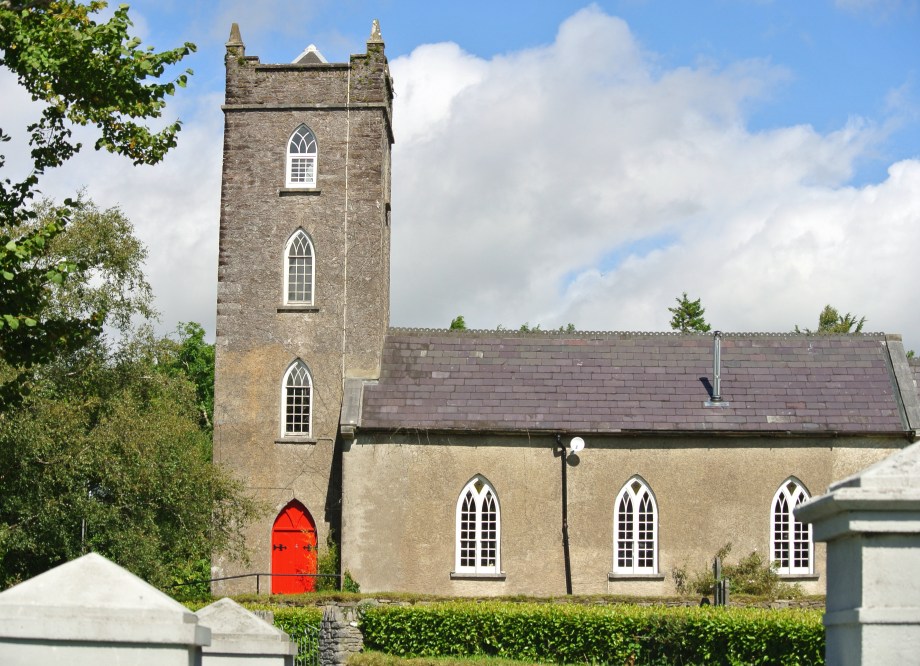
[We] drove by jaunting car [from Kenmare] to the little village of Sneem, which lies hidden by the headlands and rocky promontories of the wild coast of Kerry. To a stranger this district would appear barren and deserted, but to some of my acquaintances it is a veritable garden of Eden, and the remembrance of early days of innocent childhood clings with a perennial freshness like the fragrance of a withered rose. Here we visited the village church where once I worshipped and was taught in Sunday School; and on the green bank outside, sloping to the river, I saw the monuments of those whom I knew and revered, but who have gone to the “bourne whence no travellers return.”
Hickson JC. Notes of Travel (1893), p40
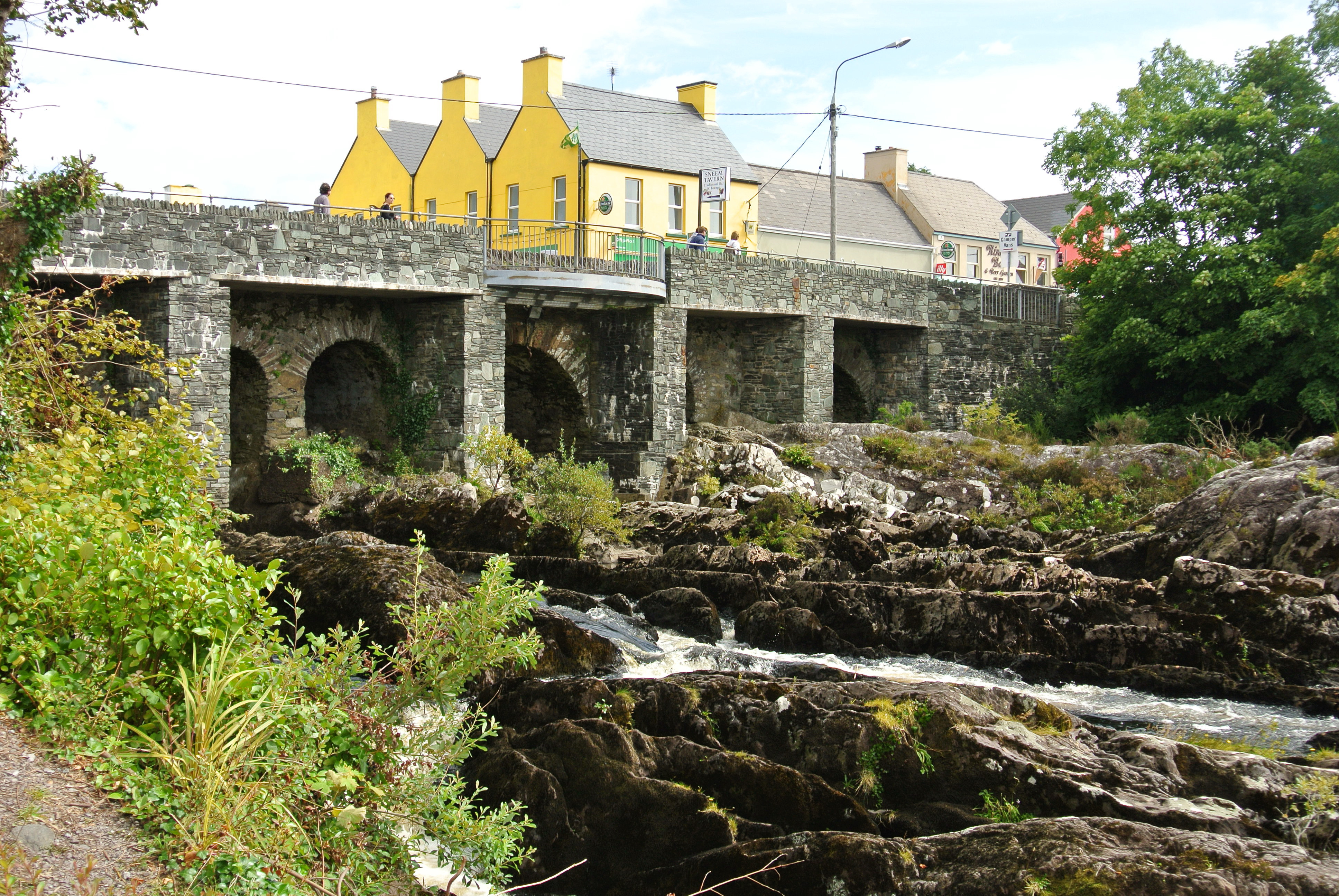
Why they lived in Sneem is uncertain, but it may well have been for employment. The local landlord, FC Bland, (whose family vault lies in the churchyard), owned a large estate which incorporated Sneem (the Bland Estate can be seen on this map), and he employed nailors, as mentioned in TE Stoakley’s book, Sneem, The Knot in the Ring (1986):
Derryquin formed a community which was largely self-supporting. There was timber in plenty and a sawpit where sawyers were kept busy converting the logs into planks, boards and scantlings for the carpenter’s shop where doors and sashes were made and all the innumerable odds and ends of estate joinery were done. There was a forge where the tenants horses were shod and all the general smith work was done, even the manufacture of bolts and nails. There was a paint, oil and glass store… Beef, mutton, pork and bacon were produced as well as poultry, ducks, geese and eggs, to say nothing of all the produce of a large kitchen garden. A good supply of fish for the table was kept in a fishpond… (p.77)
Stoakley TE. Sneem – the Knot in the Ring (1986), p77
It may have been that young John Hickson lived with his father and older brother either on the Derryquin Estate, or in the little village of Sneem, in the years after his mother died. They relocated back home at some stage, however, since William’s marriage certificate of 1858 records his address as Killorglin. But the girl william married was Mary Needham, who came from Templenoe, just up the road from Sneem. The Templenoe Church appears to have been closely associated with the parish of Kilcrohane (Sneem); the rector of Kilcrohane had responsibility for both churches throughout the years that our family was associated with them. Mary’s father, George Needham, was the parish clerk in Templenoe. The Needham family was well known in the area.
There were interesting developments occurring in these two communities during the 1850s and 60s, and the Needhams and Hicksons were deeply involved in these. Some of this history I have gleaned from Murphy and Chamberlain’s book, The Church of Ireland in Co Kerry, published 2011, and the same Murphy (Janet) has written a fascinating booklet about Richard John Mahony of Dromore Estate near Templenoe which has also provided helpful information. Other bits of information are gathered from various sources as will be mentioned. This history involves two institutions which have now largely disappeared from Ireland – the Anglo-Irish gentry and the Church of Ireland.
Sneem (Kilcrohane) Church – unprecedented growth in 1860
The COI church in Sneem was built about the same time as the Killorglin COI, during the church building boom of the early 1800s. It was constructed over two years from 1808 to 1810 in an architectural style quite different to other churches of the time. The Bland family was associated with the church throughout the nineteenth century; the tombs of the Blands of Derryquin Castle are located in the churchyard. During the 1850s the Derryquin Estate was in the hands of James Franklin Bland, and it was during his life that the prosperity of the estate appears to have reached its zenith, as described above. When he died in 1863 the estate passed into the hands of his son FC (Francis Christopher) Bland, but from that time on it slowly declined, for reasons that will be described below.
The rector of the Sneem church during those years was Arthur Vincent Watson, who held the position from 1850 to 1872; he was also rector of the nearby Templenoe church. He appears to have been well liked. Murphy and Chamberlain write: On his appointment to chancellorship, Rev Watson was described as assiduous in his duty to the distressed and a ‘golden person in opinion of rich and poor’ (Freeman’s Journal, 18 June 1849).
In 1860 there was unprecedented growth in the size of the congregation:
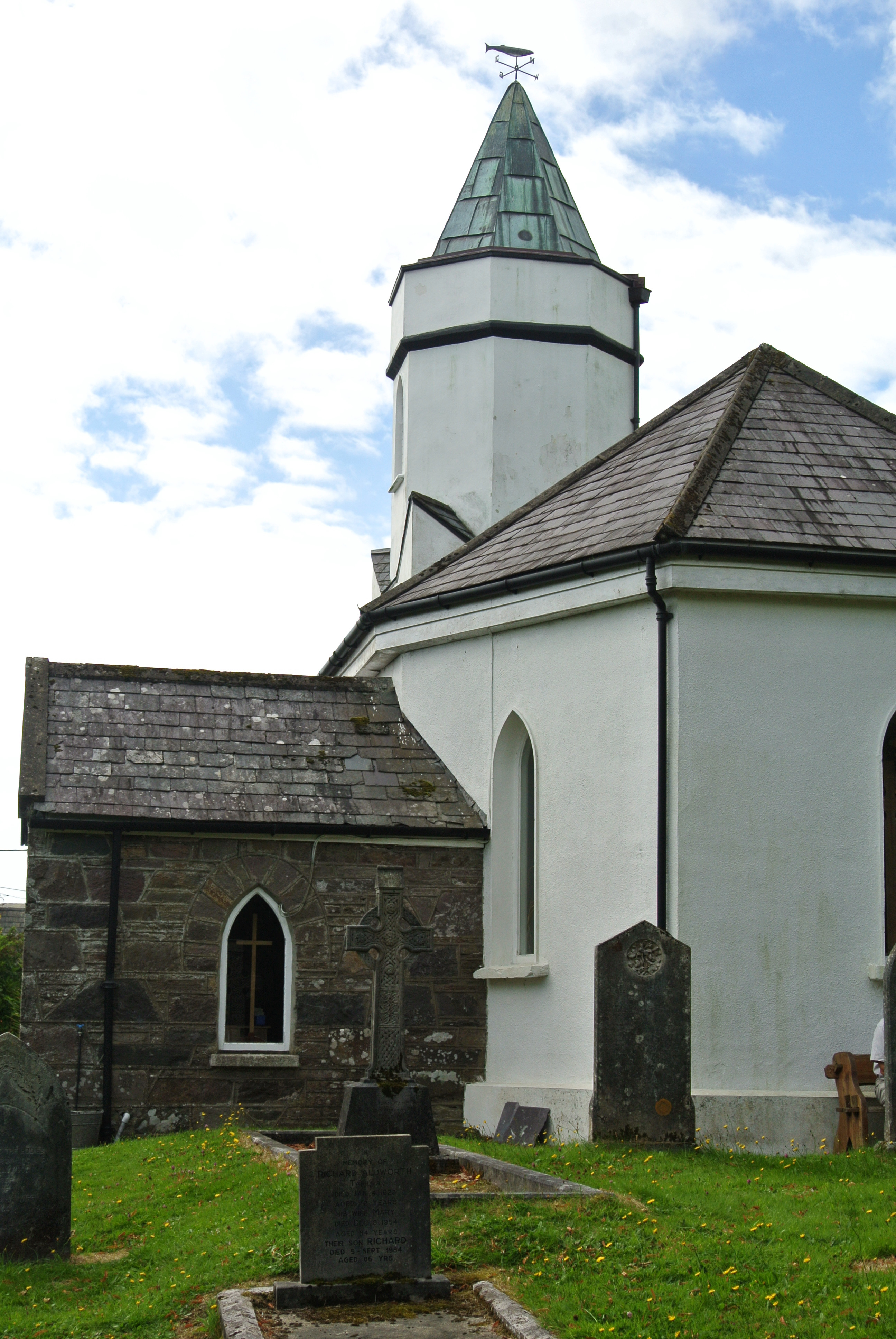
Later in the century it was reported that ‘At Sneem an effort is being made to enlarge and improve the parish church which in its present state is wholly unsuited to the necessities of the rapidly increasing congregation’ (Belfast News Letter, 27 Nov 1860). (quoted in Murphy and Chamberlain, p.122)
Murphy J, Chamberlain E. The Church of Ireland in Co Kerry (2011), p122
The authors do not hazard a guess as to what was responsible for this church growth. Perhaps it was an effect of the well run Derryquin Estate, where many local people were gainfully employed by a landlord who was a member and patron of the Sneem church.
Templenoe Church – proselytism and conflict
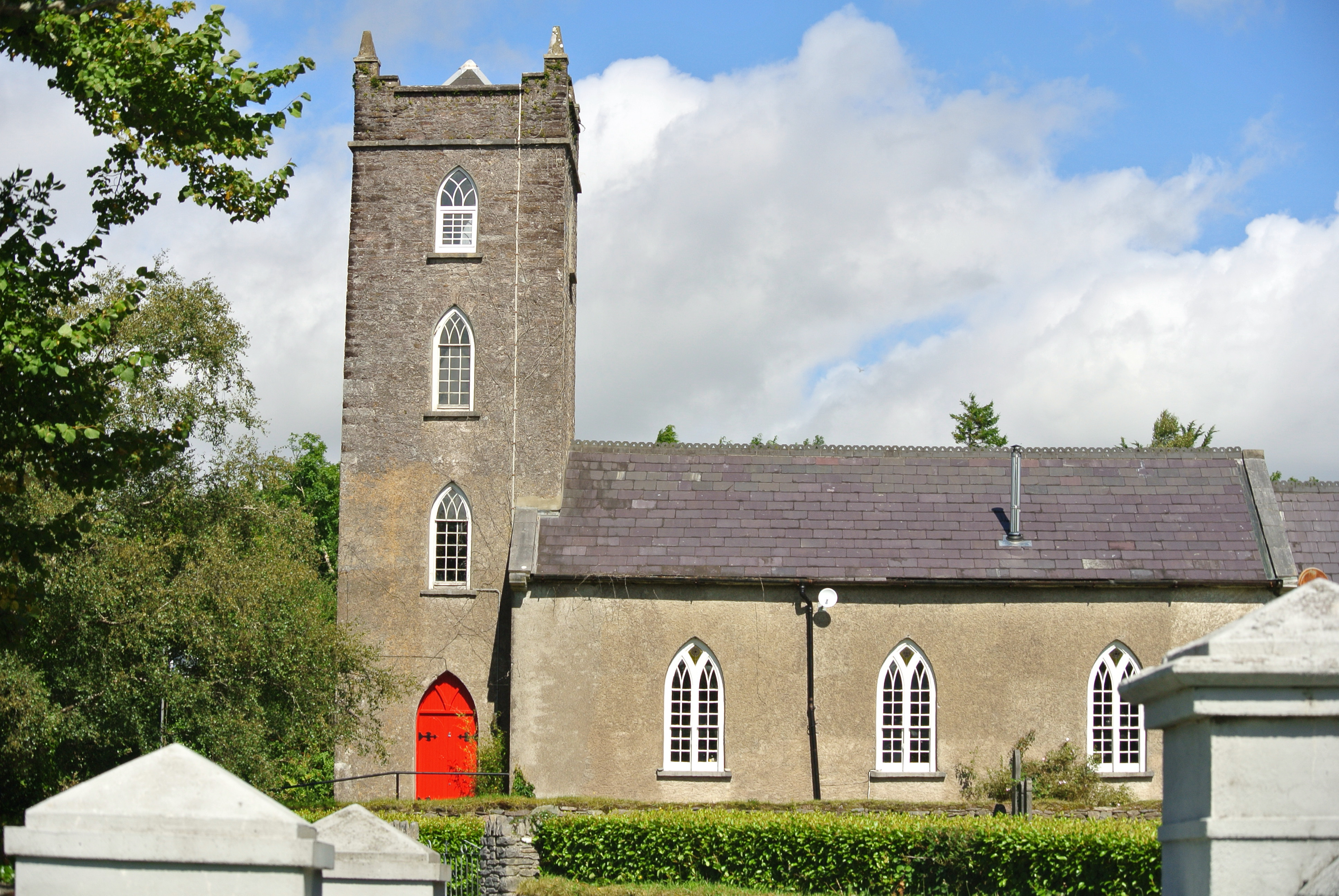
The Templenoe church was built some years later than the Sneem church, in 1816, and was associated historically with the Mahony family of Dromore Estate, which bordered on the Bland estate. Unlike the Blands, who were originally English, the Mahonys were an ancient Irish clan that had converted from Catholicism to Protestantism during the 1700s, for reasons that are unclear, but possibly to retain their title and lands. The church was built on a site donated by Richard Pierse Mahony, and inside the church there is a plaque commemorating his wife who died in the year the church was completed. It reads as follows:
In Memory of the Honourable Charlotte Mahony wife of Richard Pierse Mahony of Coss Castle Esq, and Daughter of THOMAS Lord Baron Ventry. She departed this life April 26th 1816 at which period the building of this Church was completed under the care of the said RICHARD
Murphy and Chamberlain, p.194
In contrast to the church in neighboring Sneem, which enjoyed such vigorous growth during the 1850s, the Templenoe church was the scene of much bitter controversy. This was largely due to proselytism, the practice of trying to convert people from their centuries old Roman Catholicism to Protestantism. The anger and resentment that this caused in Templenoe did not seem to affect Sneem so much, for reasons that will become clear.
One of the main proponents of this aggressive proselytism in Templenoe was Richard Pierse Mahony’s successor, his brother Denis Mahony, who was a clergyman. When Richard Pierse died suddenly and unexpectedly of consumption in 1827, the Dromore estate passed into the hands of Denis, who was the curate of Templenoe Church at the time. Denis resigned as curate to take over the running of the family estate, but as the local landlord he remained actively involved in the church, and his commitment to converting the local Catholic population to Protestantism did not abate. Unfortunately his approach was to use his power and influence as landlord to these ends, which in retrospect was quite inappropriate and bound to lead to resentment. Chamberlain and Murphy (p195) record that Rev Mahony’s reputation suffered during the proselytising movement which occurred in the area during his ministry (see ‘Religious Intolerance in Templenoe, Co Kerry 1846-51’ by Colman O Mahony published in The O Mahony Journal, Vol 13, Summer 1989, pp33- 38).
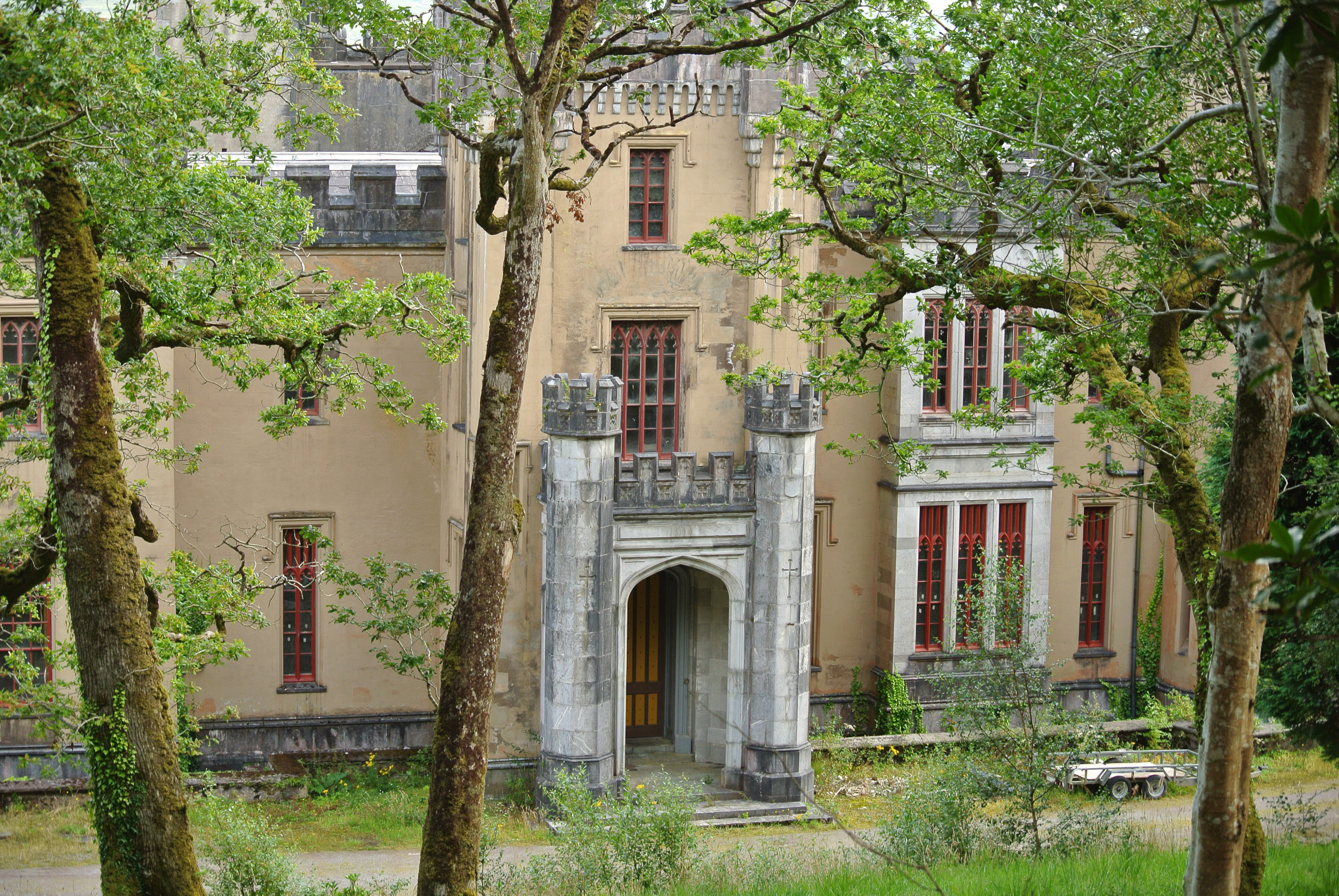
The Rev Denis Mahony built the impressive “castle” at Dromore that stands to this day, though it has long since passed out of the family. A recently published history relates:
a good volume of folklore relates to Rev Denis Mahony, whose period of management of the estate, 1827-1851, included the years of the great famine. It also included a period of proselytization which had begun in the 1820s and of which Mahony was a part. The combined events served to create a poor reputation for Rev Denis… Tales of attacks made on him and his property, involving arson and firearms, have overshadowed newspaper reports of his and his wife’s generosity to the destitute during the Famine… A story transcribed in the Schools Manuscripts Collection records in true story-telling style how Rev Denis Mahony had put a lock on the gate of the Catholic chapel and how news of his death was greeted with ‘thanks be to God, thanks be to God, the gates will be open again next Sunday’. It describes a distinct joy at the news, for four horses and six men failed to convey the hearse to the graveyard for burial, ‘all the horses in Templenoe wouldn’t bring it. That is no lie – that happened’.
Murphy J, Richard John Mahony of Dromore, a Nineteenth Century Gentleman (2011), pp.13-14
The Rev Denis died suddenly in 1851 of “apoplexy”- presumably a stroke. He had been married three times, and the estate passed to 23 year old Richard John Mahony, the son (and only child) of his first marriage. Richard Mahony, in contrast to his father, became greatly loved by the local people over the next forty years, as he poured his life energy into improving the estate and the lives of the people who lived on it, his tenants. Janet Murphy has written a short account of his life in her book, Richard John Mahoney of Dromore, a Nineteenth Century Gentleman (published 2011 and available as an ebook from lulu.com). She observes (pp.8-9) that after the death of Richard John,
It was recorded in the local press that Richard’s funeral was, without exception, the largest that had ever been seen in the county: “Midway between Killarney and Templenoe the road was crowded with people, who had travelled long distances all the previous night to pay their last respects to the memory of a man whose life, nearly half a century in their midst, won their warmest feelings of affection and esteem.” It was distressing to witness the silent grief of Mahony’s tenants, the paper reported, as some one hundred men walked after the hearse in a cortege a mile and a half long for eight miles. “It was a most impressive spectacle, the full length of this procession being visible at many points as the road wound through the magnificent scenery that marked its whole length.”
An obituary to Richard John sheds some light: “For what is counted a generation Mr Mahony has applied himself to the improvement of his estate. He has opened it up by a great series of roads, he has connected it with many bridges, he has made many miles of drains and fences; he has reclaimed hundreds of acres; he has stimulated his tenants’ improvements and respected whatever rights were thus created; he has helped his tenants in their troubles with his advice, his capital, and his command of his banking facilities; he has established model farms and model dairies, introduced better breeds of cattle, and by his own admirable example showed his tenants how to improve their stock, their dairies, and their culture. His estate is an oasis in the desert. ” (The Kerry Evening Post, 24 & 31 December 1892)
The difference between the response of the local people to father (Denis) and son (Richard) could not have been more extreme. Denis was a religious extremist, who seemed to see the conversion of Catholics as paramount to their well-being. They responded with offence and anger. Richard was apparently more interested in the people’s temporal wellbeing than their eternal destiny, and refrained from badgering them about their religion. Their lives improved and they were grateful.
Religious revival
Yet Richard John Mahony was anything but irreligious, and there is plenty of evidence that he was as concerned for the people’s eternal salvation as was his father. For all his down to earth practicality he was extremely heavenly minded. In 1861 he spearheaded a religious movement that led to the formation of a new brand of Christianity in Kerry, which was known as Plymouth Brethren, or simply “Brethren.” This revival is recorded in various Brethren writings of the time (see especially the book Chief Men Among the Brethren which contains biographies of Mahony and Bland among many others), and Richard Mahony is seen as its catalyst. His childhood friend, FC Bland at neighbouring Derriquin, was caught up in the same movement. But unlike Mahony, who saw his life calling as managing and developing the estate that had been left to him, resulting in the transformation of the lives of his tenants, Bland became so caught up in religious fervour and a new love for the Bible that he effectively abandoned his estate, which went into decline. As Stoakley writes in his book,
JF Bland died in 1863 and was succeeded by his eldest son FC Bland… but two years before his succession something had happened which was to have a profound effect on the destiny of Derryquin. This was the formation in Kenmare of a religious revivalist sect whose members were usually simply known as Brethren, although the remnants who survived to record their religious affiliation in the censuses of 1901 and 1911 gave it as Plymouth Brethren. One of the gentry of the area, Richard Mahony of Dromore Castle, which is about halfway between Kenmare and Derryquin – became converted to their beliefs, and he in turn passed on his convictions to his great friend Francis Christopher Bland. The sudden change which took place in the latter’s priorities was thus expressed in his obituary:
It was the year 1861, and while busily engaged in the improvement of his estate and the condition of the tenants thereon, by building, roadmaking, draining, that the revival broke out hard by in the meetings held by his dear friend and neighbour the late Mr Richard Mahony, of Dromore. Becoming anxious about his salvation, in the presence of numerous conversions among his acquaintances, he consulted the Rev Frederick Trench, of Cloughjordan, the well known founder of the Home Mission, and from him received the strange advice to begin preaching, and as he said, “in watering others you will yourself be watered.”
This advice he followed and for several years while the revival was at its height he travelled around Ireland on a preaching campaign. He then turned his attention to England and eventually settled in Weston-super-Mare, which acted as his base from which he conducted his campaign in numerous other places, especially Plymouth and London. It was the worst possible time for a landlord to absent himself from his estates; while he was preaching in England Ireland was passing through the difficult years of the land agitation, and it was inevitable that the fortunes of the Derryquin Estate should decline. In his preoccupation with the salvation of himself and his fellow men, the owner of Derryquin was unmindful that his estate itself needed its own kind of salvation.
Stoakley TS, Sneem – The Knot in the Ring, pp.77-78
George Needham and his family
George Needham, as mentioned above, was the parish clerk in Templenoe. He had English roots, though I believe he was born in Ireland, as were all of his ten children. He had been in the Kerry Coastguard, an institution that was not greatly liked by the native Irish, since one of their duties was to prevent smuggling, which was a time honoured, if illegal, profession on the Kerry coast, dating back hundreds of years. George and the wider Needham family were members of the Templenoe church. He would have been witness to Denis Mahony’s proselytizing activities in the years before Richard Mahony took over the Dromore estate, though what he thought of them is unknown to me. His wife, the mother of his children, had died at a young age, and when he was 58, in 1862, he remarried, though he died barely a year later.
George’s first child was Mary, who at the age of 25, in 1858, married William Hickson, of Killorglin, who she must have met at the Sneem church. The whole Needham family, including Mary and William, were profoundly affected by the Kerry Revival -understandable given their close proximity to the Dromore Estate where some of the earliest revival meetings took place. Four of Mary’s younger brothers later became evangelists after they had migrated to North America. They were notably involved in the campaigns of the famous American evangelist, DL Moody, in the latter years of the nineteenth century.
William and Mary, like many others, left the Church of Ireland as a result of the revival to join a Brethren assembly. Interestingly, Richard Mahony, whose actions had triggered the revival, did not leave but remained in the established church all his life. Then in 1865 the Hicksons migrated to America, taking William’s ageing father, Richard Hickson, with them. However, 12 years after going to America (and some years after Richard had died in Providence, Rhode Island) they returned to Ireland and re-migrated to Australia, where all of William’s siblings including his youngest brother John had previously gone. In Sydney they remained staunch members of the Brethren Assemblies (though John and his family were always staunch members of the Church of England). Their eldest daughter, Susan Hickson, had five daughters and two sons. Her fourth daughter, Gertrude, was my grandmother.
The Church of Ireland in Sneem and Templenoe
What became of the churches in Sneem and Templenoe?
The Sneem church is still a functioning Protestant church, albeit much contracted in size compared to the 1860s. Chamberlain and Murphy (p.112) write:
In the twentieth century, the church was blessed by Bishop R Wyse-Jackson in 1967 following extensive renovations and named after the Feast of the Transfiguration (The Kerryman, 12 Aug 1967). At that time it was observed that the rector, Rev Charles Gray-Stack, had faced a mammoth task in fund-raising ‘considering that he has only a resident congregation of about seven’. The Coolea Catholic Church choir sang Sean O’Riada’s Mass hymns at Kilcrohane church in 1972 (The Kerryman, 5 August 1972). In the same year, Rev Gray- Stack founded an annual festival for peace at Sneem (see Deans). In 1976 the pews were replaced by oak ones from Muckross Church (Sacred Stones, pp111-112).
Chamberlain and Murphy, p.112
Clearly the COI in Sneem has declined dramatically since 1860 when the church was at its peak. No doubt the exodus of Protestants from Ireland in the latter part of the nineteenth and early twentieth centuries had much to do with this. Since Ireland became its own nation independent of Great Britain in 1921 Kerry has been very much Roman Catholic; though small Protestant groups exist, I have been unable to locate any Brethren assemblies in the county. The Sneem Church of Ireland remains part of the tiny remnant of what was once the state church of Ireland. It is good to read that the antagonism that once existed between Catholic and Protestant has largely disappeared.
Of the Templenoe church, Chamberlain and Murphy write:
In her will dated 11 May 1951, Nora Evaleen Hood (née Mahony), daughter and last direct descendant of Richard John Mahony of Dromore, bequested ‘a sufficient income for the upkeep of Templenoe Church and also to provide for the salary or stipend of the rector’ (The Kerryman, 11 October 1952). Templenoe Church was deconsecrated in 1993 and sold. It was later converted into The Vestry Restaurant; another business operates there today. The property has recently been offered for sale.
Chamberlain and Murphy, p.194
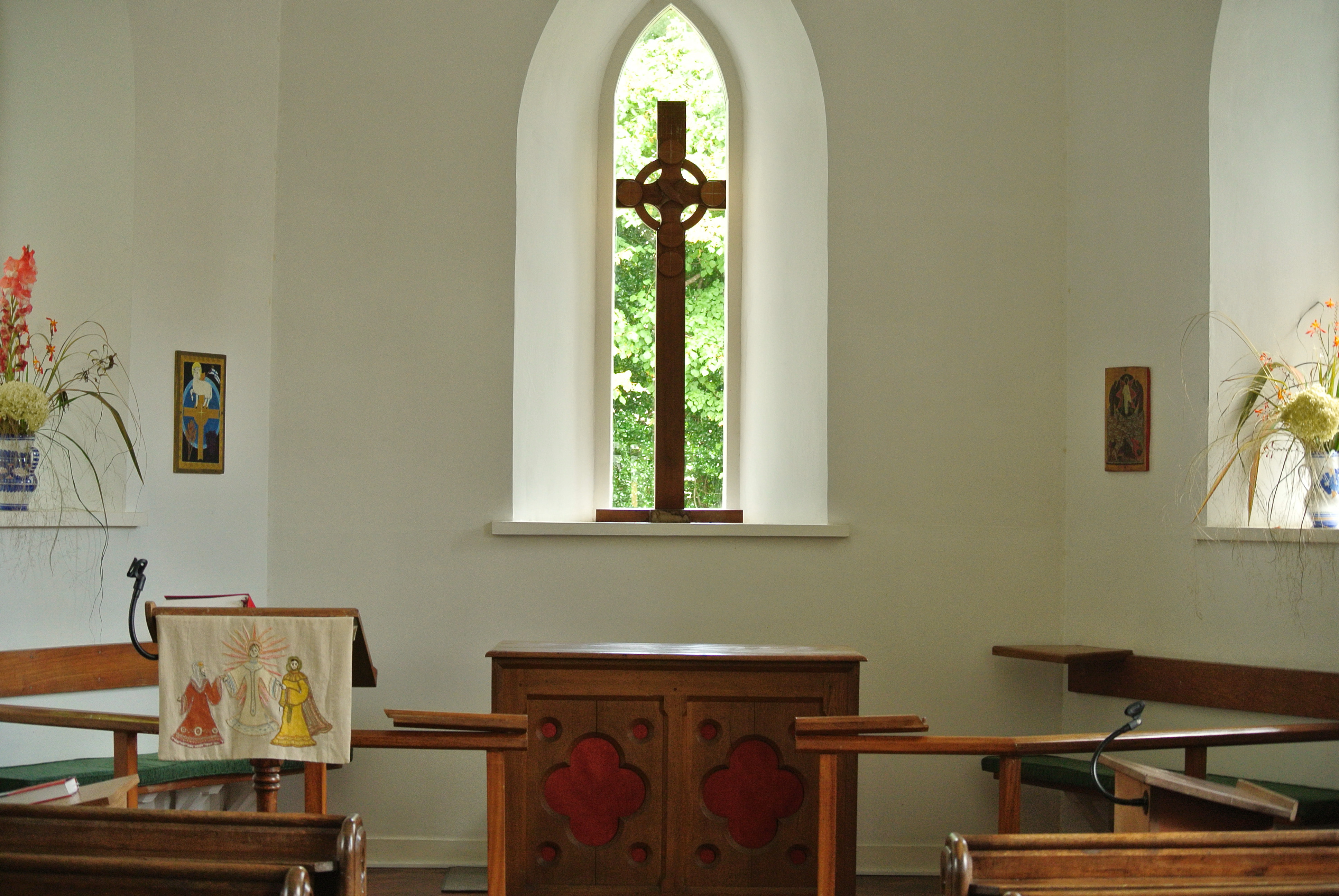
I visited these churches on a brief trips to Kerry in 2016. The graves and family vaults in the Sneem churchyard are falling into disrepair. I recognised the names of various Blands, both on graves and on plaques in the church, which is beautifully maintained. The Templenoe church was locked up and has apparently been used as a private residence. We were able to walk through the churchyard and we saw some Needhams on headstones, but none that we recognised.
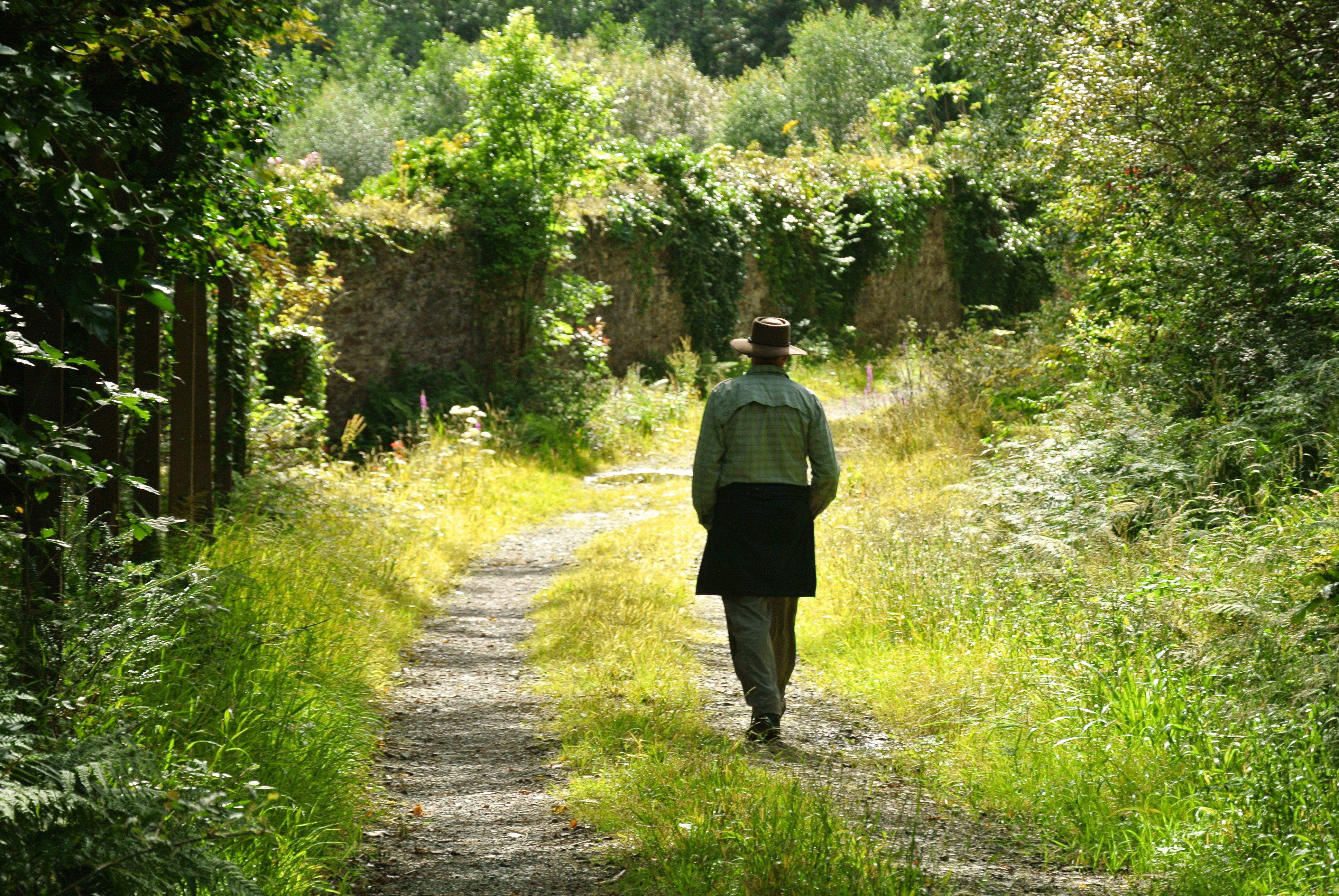
The last time I was in Kerry, in 2019, I walked along the old road which is part of the Kerry Way, past Dromore Castle. The house is still impressive and has clearly been restored, though it looked deserted and the grounds were overgrown. The direct descendants of Richard Mahony have long since disappeared from the area, though there are no doubt more distant descendants scattered around. Dromore Castle passed out of the Mahony family many years ago. Like the Mahonys, the Blands have disappeared from Kerry, their family home, “Derryquin Castle,” having been destroyed in the Irish Civil War. That Dromore Castle was never torched may well have been because of the legacy of Richard John, and his son, who was also greatly admired. The Mahonys, what is more, were “true Irish,” despite their conversion to Protestantism, whereas the Bland family were, like my Hickson and Needham families, originally from England, the oppressor.
The spiritual legacy of the churches, especially as it is expressed in members of my family, carries on in various places around the world, not least right here in Australia, as I have related in previous blogs. I will write more of the Brethren movement in Kerry in my next and last blog on the Church of Ireland in Kerry.


David!
When did you find the time? I have to confess to just skimming as trying to read your tales and watch Wimbledon at the same time has proved to be too much. I will get back to it though as it sounds really interesting.
Regards,
B.
Excellent post. Thank you.
Thank you for your writings on our Hickson families .
I enjoyed learning new things about all of them.
They were all so adventurous and brave to find their places in their world.
Without them I wouldn’t be here in Australia.
Wendy Fitzgerald
Melbourne
Hi Wendy, which of the Hicksons are you descended from?
David
We have made contact a while ago .
My GGGrandmother
Richard and Mary’s daughter Susanna Hickson 1831 to 1888
She married John Hume in Australia and her daughter Susannah Hume married Thomas Gregory Humphries their youngest child Arthur William Humphries then had my mother Joyce Humphries born 1919 and then came I .
Wendy born 1951
David
We have made contact a while ago .
My GGGrandmother
Richard and Mary’s daughter Susanna Hickson 1831 to 1888
She married John Hume in Australia and her daughter Susannah Hume married Thomas Gregory Humphries their youngest child Arthur William Humphries then had my mother Joyce Humphries born 1919 and then came I .
Wendy born 1951
Hi again Wendy. Sorry for my poor memory. I have now updated the tree on Ancestry so hopefully I will not forget the connection again. Did you marry a FitzGerald or did your mother Joyce?
David I am a Fitzgerald by birth as my mother Joyce Humphries married Dorian Fitzgerald .
Wendy 🙂
OK, another name to add to my family tree. Fitzgerald – a good Irish name. What was your father’s ancestry?
David ,
I have from Ireland surnames Hatch , Sheehan , Lynch , Lucy , Casey , McCarthy , Gallagher .
From Wales I have Rees and Davis and Davies and Morgan .
My DNA shows I am 55% Irish then English and Scottish .
I’m just a Aussie 🙂 .
We have quite a few early Aussies who came here as guests of the English government .
Humble beginnings hard workers and in some short lives lives.
We all have a story don’t we .
Regards
Wendy
The stories of people’s lives are endlessly fascinating for me. The diversity of ancestry and heritage is what makes the story of so many Australians so interesting. The Irish have certainly contributed a lot to our makeup. Sounds like you have done a lot of research. I am amazed at how many I talk to who really have no idea where their forebears came from,